Welcome to Check Your Mode

The all-inclusive, ever-changing, and uncomfortably flexible guide to all things music in the 2010's.

Sunday, May 29, 2011

An Horse - Walls: B+

If Walls isn’t the transcendent bastion of coming-of-age adolescence that An Horse intended it to be, it is certainly an indication of the Australian girl/guy duo’s potential to write at least a few songs akin to their ambitions. The songs of Walls are spritely when they need to be and somber when appropriate. Singer Kate Cooper has a precocious voice that bounces along to Damon Cox’s instrumentation with a strangely Brooklyn accent. It comes out when she pronounces those “r”’s in “Dress Sharply”, and gives Cooper a distinct personality on the album, whether that flair was intended or not.

Walls is abound with signifiers of young adult friction like obligatory “Twin Peaks” references and songs about airports. The arrangements are often rudimentary, but when Cox accompanies Cooper’s erudite lyrics with instrumentation just as incisive, the results are exemplary, as on the thumping album highlight, “Trains and Tracks”. Walls is peppered with some great one-liners, and, even when Cooper talks about that airport, she sounds clever and self-aware. “We could count all the planes at the airport,” she sighs in the gentle “Windows in the City”. “But that would mean that you and I were in the same spot.” Unfortunately, Walls features too much inconsequential filler, but, its highlights show that An Horse may yet have their best days ahead of them.


Share/Bookmark

Friday, May 27, 2011

Jason Isbell and the 400 Unit - Here We Rest: A-


Based on how gorgeous Here We Rest is, it’s a wonder why Jason Isbell hasn’t become an enormously popular country star with the likes of Lady Antebellum, Taylor Swift or even The Zac Brown Band. Here We Rest is troubled and incredibly personal, but this isn’t a Jamey Johnson or Hayes Carll deal where you get some guy twisting country into progressive directions; the former Drive-By Truckers member’s newest album is so elegantly polished, you might want to consider recommending it to your grandmother to make it her album purchase of the year. These are unquestionably pop songs, and they’re performed so wonderfully, it will give you renewed faith in the structure of a song, something that seems to have been eluding me these past few weeks.

Instrumentally, Here We Rest does not surprise. You’ll hear acoustic and slide guitar as well as standup bass and banjo. Isbell has a smoky drawl that seems to sound both weathered and youthful. He employs it to make the arrangements of Here We Rest pleasing and often exemplary. “Never Could Believe” pops with tactile percussion to give the track a rich ensemble flavor. The post-chorus of last and best track, “Tour of Duty”, features a heavenly chord progression that shouldn’t fit within the country setting, but is absolutely heart-wrenching, an excellent coda to the track’s bittersweet subject matter of a soldier returning to civilian life.

But the core of Here We Rest is Isbell, himself. With his personable voice, he can revisit memories and play characters so convincingly, your guess is as good as mine as to which songs belong to which category. The album’s many vocal harmonies are precious, but rarely does Isbell come off as optimistic. From Here We Rest’s onset, he longs to go back to his Alabama hometown through the pines that line the roads. In the first track, he sounds separated from the past that shaped him, and we learn what caused such isolation as Here We Rest progresses. Isbell speaks at length about lost love and drug use, but he covers these topics in ways that incorporate a story. Instead of waxing poetic about a lost love, Isbell decides to pay her a visit. Now, instead of grasping at metaphors, you can feel Isbell’s nostalgia in real time as he catches up with his old flame in the beautiful “Stopping By”. “Darling, I’m not one to judge,” he sings in the bridge of “Codeine” to his lover addicted to the titular drug. “But if I was I’d say you don’t look so good.” It’s a clumsy line, but its imperfection makes the track all the more compelling. His dejection is palpable in the song’s final chorus, when he reinforces for the last time that it is one of his friends that’s feeding his lover’s addiction.

The travails of adulthood pervade every note of Here We Rest, and Isbell conveys them with personal stories of Everyman flair. In an especially poignant expression of weakness, Isbell fears for the future in one of the album’s most touching lines. “All my playground fears have faded,” he sings with trepidation on “We’ve Met”. “Replaced with grown-up nightmares / That have come true.” These are tender accounts from a road to maturity fraught with mistakes, but they’re worded so beautifully, they are instantly forgiven. Chord progression notwithstanding, “Tour of Duty” best accomplishes this, ending Here We Rest with a future as unsure as that of any other character on the album. “I’ve done my tour of duty / Now I’ll try to do what a civilian does,” Isbell sings over tightly strummed guitars and light percussion that convey an air of confidence. It’s a line so simple, it’s silly, but it excellently exemplifies the debilitating culture shock that can demoralize someone that’s been away from their home far too long. It’s a familiar but depressing situation that can ruin the commercial potential of Here We Rest. That is until that chord progression kicks in.

Share/Bookmark

Wednesday, May 25, 2011

Faust - Something Dirty: B

The only thing more surprising than the fact that Faust has, more or less, been around since the early 70’s is the fact that their newest album, Something Dirty, has the impatience and frustrating inconsistency of a group that formed yesterday. It’s hard to say exactly what number album Something Dirty is in Faust’s catalogue, because there is a whole ordeal about the group splitting into two bands with the same name, both releasing albums that fans debate whether which if any are released by the Faust of kraut-rock yore. And if this creative fissure had any effect on the music that this version of Faust has created, it’s pretty obvious. Something Dirty is a hodgepodge of disparate guitar squawks, jaunting atmospherics and foreign voices so ripe with youthful vigor it often collapses under the weight of its own lunacy.

The reason why I see Something Dirty’s chaos as more or less endearing is because, when I listen to the album, I cannot help but have glimmers of hope that Faust will tout out something cohesive when really cool ideas keep popping up. Regardless of how misguided the songs of Something Dirty are, their components are great in their own right, and, when thrown into a complete package as opposed to an aimless void, the results are astonishing. “Lost the Signal” ebbs and flows beautifully as a ballad sung by a whispery female voice. The chugging guitars and determined percussion of “Dampfauslass II” could be turned into great post-punk. But “Damfauslass II” simply peters out in two and a half minutes, its concept dashed away to make room for the next musical hiccup. Unfortunately, such is the story of the tracks that precede it.

So make a mixtape of melodic sound bytes interspersed with intriguing but ultimately pointless tape fuzz and recorded machinery and you have Something Dirty, an album that would be pretty good if it could stand to pause and focus before thrusting itself into seven-minute ambient odysseys and minute-long affronts to tonality. Something Dirty isn’t an album to be enjoyed, but to be referenced. Through it, we see both how Faust has evolved in the past forty years and what they might think of next. Do groups this old make transitional records? If not, then kudos to Faust for setting the standard.


Share/Bookmark

Monday, May 23, 2011

Robbie Robertson - How to Become Clairvoyant: B+

Let’s be honest; if Robbie Robertson wasn’t in The Band, nobody would give a shit about How to Become Clairvoyant. The guy was in a pioneering rock band, left, got into some controversy over buying copyrights and alienated most of his fan base, so now we’re here in 2011 with his fifth solo effort invading our short term memory and clogging up our bandwidth. Robertson’s a couple years from hitting 70, now, so I don’t really have to tell you how ambitious How To Become Clairvoyant is. Understated production and, with the exception of a cool instrumental and an Eric Clapton cameo, no flourishes, whatsoever. Ya know, “Just a bunch of guys gettin’ in a room and jammin’!” kinda thing. Basically, How to Become Clairvoyant sounds like what your uncle would have made if he decided to realize his dreams of being a rock n’ roller during his mid-life crisis, and, admittedly, that has a slight allure to it. The album is pleasant and slightly better than the other input by washed-up rock stars as of late. Also, I love my uncles. So this one’s for you!


Share/Bookmark

Phideaux - Snowtorch: B-

Just some really lame, really boring prog rock. It’s a shame that it’s so difficult to satiate one’s taste for the expansive and flourished in the modern musical landscape, but, if you’re looking for it, you’re not going to find it here. Snowtorch, more than anything else, makes me wish that Rush would release their newest album, already. Other than that, it’s highly skippable.


Share/Bookmark

Sum 41 - Screaming Bloody Murder: B-

The new census has been released and so comes a new Sum 41 album. Working off the 2000 census, the group had a lot of trouble gauging what the angst-ridden and disaffected youth were listening to and were angry about towards the end of the decade, and, as a result, their attempt to rewrite their past glories in 2007’s dreadful Underclass Hero was a total failure. Working off that dated census, Sum 41 was becoming increasingly desperate to get that demographic riled up to listen to their pop punk tunes, and, now, with fresh data to analyze, they could finally pander to that teenage anguish so that adolescents would, once again, purchase their shit.

Dr. Livingston prepared the cryogenic pods for release. He tenderly typed the release code into the keypad and watched, expressionless, as, one by one, all the members of Sum 41 emerged from their four-year slumber. It took the boys a minute or so to shake off their stiffness from being frozen for so long, but, once they had, they brushed off their tattooed arms like it was 2007 again, and looked to Livingston for what to do next. Without speaking, Livingston walked toward the Information Center, the flaps of his white lab coat moving a second behind him. The boys looked to each other, shrugged and followed him.

The Information Center had not changed since 2000. It was still lined with steel panels, flashing lights and buttons placed indiscriminately along them that’s purpose the group could not begin to understand. They followed Dr. Livingston to the opposing end of the domed room, where a myriad of televisions screens covered the wall and an enormous control panel wrapped around them, covered in innumerable buttons that looked like goose bumps on skin.

They watched as Livingston conferred with Dr. Harris, who sat at the control panel, pressing buttons with seemingly no discretion. After some spoken words, the two nodded to each other and Dr. Livingston made his way to what looked like a printing module positioned on the right side of the room. The module hummed with life as, one by one, sheets of paper emerged from it like a financial calculator. Dr. Livingston grasped and examined each sheet as it came out, his eyes scanning the data quickly as if it were written in binary code.

After about ten minutes of inspecting what looked like fifty sheets of paper, Livingston shifted his gaze from his reading material to Sum 41. With a look of genuine interest, he spoke to the group for the first time in almost half a decade.

“Apparently, Green Day’s still popular,” he said.

“Huh,” responded Daryck Whibley. “Well, I guess that makes it pretty easy for us, doesn’t it.”

“Pretty much,” responded Dr. Livingston, taking his pair of reading glasses out of his breast pocket and inspecting the data with more detail. “Also, this group Avenged Sevenfold cleaned up and made a pretty successful pop metal album.”

“Uh huh,” responded Whibley, taking out his notepad. He brushed off the permafrost and began taking notes.

“And this band My Chemical Romance released an album in 2004 that made quite a bit of money,” continued Livingston. “They were apparently a little more theatrical, so you guys are going to have to go a little bit more in that direction.”

“Fantastic,” quipped Whibley jotting down the last few words into his notebook. He put it back into his pocket and brushed back his blonde hair, which still pointed directly at the ceiling like when he entered the chamber in 2007. “That all?”

“Yep,” said Livingston. “I think that should get you through an album.”

“Alright then,” Whibley said. With that, he turned to his bandmates, nodded at them and the group began walking out of the Information Center toward the facility’s recording room. Knowing Livingston’s schedule, they would probably have to pump out an album within the week. They walked with purpose, determined to sell out harder on this release than any other they had made in the past. With this knowledge, they definitely had a chance.

Livingston looked on, his expression unchanging as the group turned the corner and disappeared from sight.

“You know, one day, we will have to replace them,” Dr. Harris remarked, turning from his control panel to look at Livingston. “They’re already fifteen years old.”

“I know,” responded Livingston as he too began leaving the Information Center. “I dread it every day.”


Share/Bookmark

The Kills - Blood Pressures: A-


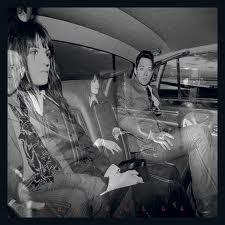
I’m one of the few people who were introduced to The Kills through Alison Mossheart’s Jack White-helmed side project, The Dead Weather. Their first album, Horehound, was the last fantastic product White put his name on. It was dark, perverted and great fun for its sheer lack of fucks to give and chutzpah density. I fell in love with its harrowed greasiness immediately, and it claimed the top spot of my albums of 2009 list with great help from Mossheart’s lead singing performance. Her work was balls-out and uncompromising. A place in my heart was secured for her when she lost all resolve at the close of “Bone House” and positively screamed her last verse with wild abandon like she had nothing left to lose.

As a part of The Kills, however, Mossheart does not come close to the bellowing behemoth featured so prominently on Horehound. Instead, we have a simmering, slinking singer who has less of a personality than a voice to share. She simply sings Blood Pressure’s melodies well and is more than happy to cede some vocal presence to her bandmate, Jamie Hince. “I swear this is the last goodbye,” she sings at the beginning of “The Last Goodbye”, implying a weakness and frailty toward leave a detrimental lover, a sentiment that would belie the mindset of the femme fatale that had a bullet burning a hole in her pocket on Horehound. On Blood Pressures, Mossheart isn’t the centerpiece of her songs, sharing significant space with other melodies and Hince’s guitar lines.

The good news is that the album does not lose much as a result of Mossheart’s loss in prominence, as Hince’s guitar lines and the group’s melodies are fantastic. Blood Pressures is an excellent record, even if it cruises in comparison to The Dead Weather discography. Every track is good for at least one catchy hook, and most have several. “Nail in My Coffin” floats atop a buoyant bass drum and snare pattern. “Damned If She Do” smolders with skuzzy guitar and drum machine and “Pots and Pans” thumps along with a foreboding acoustic and Mossheart’s playful derision of her lover’s high expectations. “Baby Says” is unique for featuring light verses that ceaselessly dive into an ominously jaded guitar riff. Mossheart raises her voice to excellent effect in “DNA”, as she is backed by group vocals that build around the line, “We will not be moved by it.”

My only criticism of Blood Pressures is that it is just a collection of excellent songs from a group I believe could have a more cohesive theme to their records. Regardless, the album is fantastic pop, however dark that pop may be. It is another great addition to the group’s assembly of tracks destined to slaughter when slathered in darkness and cigarette smoke when played on a stage. While not as crazed as a Mossheart project can be, Blood Pressures will not disappoint for its great riffs and nimble songwriting.

Share/Bookmark

Saturday, May 21, 2011

TV on the Radio - Nine Types of Light: B+

Like M.I.A. and, I guess, The Field, TV on the Radio has had a rancorous relationship with myself. They’ve been one of those groups to me that I’m sure every music fan has encountered that the people and critics around cannot stop raving about, but I cannot fathom how anyone could find them tuneful, let alone outright enjoyable. Coming into Nine Types of Light, TV on the Radio’s fifth album, I had a very distinct idea of what this group was going to sound like. I was expecting the outrageous, the flamboyant and the needlessly weird. If I didn’t have a heinous headache by this album’s end, I would probably pass out from boredom sometime in its middle.

That gaudy TV on the Radio shows up on about half of Nine Types of Light, which is probably why it is their worst received album to date. The group opts for tempered balladry as much it does for uproarious calamity. To their credit, now more than ever, it sounds like the group has enough of a grasp on their sound that they do not have to constantly puncture pleasure centers to distract from what they lack, which, to me, was always consistency. If it’s not as ridiculous as fans would have liked, it’s undoubtedly reliable, a sentiment that more than exceeded my expectations coming into the record.

I’m not even partial to either style featured here. The more active numbers confound my impression of the group by being fun and hardly grating. “Hey girl don’t mind the noise,” lead singer Tunde Adebimpe intones at the beginning of “New Cannibal Run”. “It’s just the sound of being dragged to Hell.” In that track, he sounds like a crazed Tone Loc over a deviously fuzzy bass line that shows off a humorous side I didn’t know the group could have. Adebimpe is particularly impressive on this album, his voice crisp and expressive enough to be the focal point of most of Nine Types of Light’s tracks. It’s adaptive to the slower tracks on the album as well, giving them a cracked flair even when they’re not necessarily shooting for the rafters. When he sings, “You’re the only one I ever loved,” in “You”, it sounds genuinely heartfelt. The slower songs are great, but my only criticism of them is that, when they get too slow, they sound like dead ringers for The National songs. “Keep Your Heart” and “You” are nearly indecipherable for their double-octave singing and mechanical percussion, and it certainly doesn’t help that both tracks are next to each other on the record. Nine Types of Light is frontloaded with these slower tracks, so it may sound slow to start, but all its songs stand up as solid musical statements.

So, basically, my reservations on TV on the Radio are fucked. They are a really good band, and, if Nine Types of Light is any indication, they are definitely capable of writing albums as good as people seem to think Return to Cookie Mountain and Dear Science are. That it’s just a really good album will most likely disappoint longtime fans of the brash expansionism the group seemed to take pride in the decade they’ve been around. Extricated from its makers’ legacy, Nine Types of Light is worth your time, and I’m more than content to wait and see what comes next. The album may not win TV on the Radio more fans, but it buys them more creative time to work on their next opus. The good news is I’ll be eager to hear it when it’s released, now.


Share/Bookmark

Wednesday, May 18, 2011

Dirty Beaches - Badlands: B

Do you know how difficult it is to review an album that has no songs on it? I mean you try to make the best of things by describing sounds temporally or in reference to some sort of palette, but when an artist gets in a room and just strums a guitar and howls for a bit, it’s really tough to validate that. Dirty Beaches’s debut album Badlands is such an album, and, because Alex Zhang Hungtai, the man behind the group, refuses to write songs on his album, then I refuse to write about it in any other way than in reference to songs:

“Lord Knows Best” is the only actual song on Badlands. It has a nifty little piano line and Hungtai’s words other than his repetition of the song’s title are actually intelligible. “Lord knows best,” he sings. “But I don’t give a damn / ‘Bout anyone / But you.” Not bad, Hungtai. If you wrote more stuff like that I’d actually enjoy your debut album.

The rest works is a bell curve in terms of songability with “Lord Knows Best” being in the middle. Everything else is just really tedious guitar strumming and yipping vocals filtered through something seriously awful to the point where every new elements sounds like a swarm of insects. You can hear the bass in “True Blue”! Do you care? I don’t.

Fin.


Share/Bookmark

Tuesday, May 17, 2011

Tim Cohen - Tim Cohen's Magic Trick: A-


Here’s an interesting line with which to start off an album: “What’ the matter / You never seen a man on fire?” The first track of San Francisco indie rocker Tim Cohen’s second solo outing bursts out the gate from the moment you press play with that line, getting in a quick laugh that sets the tone for the genial candor the man provides throughout Tim Cohen’s Magic Trick. The track is a standard indie acoustic strummer, but you cannot help but pay the utmost attention to Cohen’s lyrics for that excellent opening line.

Tim Cohen’s Magic Trick is, for the most part, an indie folk album in the vein of first track “I Am Never Going to Die” with splashes of ‘50’s pop ala Roy Orbison thrown in. Cohen’s penchant for the well phrased and humorous is always the album’s main draw, but it is not meant to be a comedic release or even a send-up of folk trends in the vein of The Magnetic Fields’ 2010 album, Realism. Instead, Cohen’s lyrics give the songs of Magic Trick warmth, building upon his character rather well as the album goes on. Whether exuding comfort or comic relief, he’s a personality worth listening to, and he consistently pleases at molding rhetoric to complement his songs.

The album’s instrumentation is standard but well produced. It rarely indulges itself or diverges from its layout of acoustic guitars, lush bass and hand percussion. When it does, those new elements tend to stick out but in a way that aids their respective songs. The electric guitar on “The Spirit’s Inside” makes it sound more like a fun take on Ariel Pink’s take on a 60’s AM radio. The organ in “Top on Tight” adds to the song’s playful nature and the warped synth in “Hey Little One” makes the track more hectic to suit its painfully short length. Because Cohen’s voice does not have a very high range, he often has female voices backing him up, which often steps up the beauty of his songs, as is the case with “Hey Little One” and the heavenly coda of “I Looked Up”.

So bottom line is to come for the personality and stay for the brilliant songwriting. Though his influences are far from revolutionary, Cohen has the ability to take these recognizable elements and infuse them with a dry wit that grants them much uniqueness to spare. Whether he’s dismissing love in a monotone on “Legendemain” or flipping the tunnel of love concept on its head in the song of the same name (“We are two speeding trains / In the tunnel of love”), Cohen sets himself apart from his lo-fi scuzzmuffin colleagues in his predilection for legitimate songwriting. The guy’s rather prolific, working on many side projects such as The Fresh & Onlys to keep fans thoroughly satisfied with his distinct brand of folk. So, if you like Tim Cohen’s Magic Trick, there’ll plenty more where that came from.

Share/Bookmark