Welcome to Check Your Mode

The all-inclusive, ever-changing, and uncomfortably flexible guide to all things music in the 2010's.

Tuesday, July 12, 2011

Vampillia - Alchemic Heart: B+

For those of you who checked out my list of favorite albums of 2010, you may have noticed another list on there of considerable length of all the albums I had yet to grade. Since that December 31st posting, I have listened to and graded a lot of the albums on that list. Some of them I have enjoyed quite a bit, enough to place them in the top fifty of that massive aggregate.

An album released in 2010 that particularly peaked my interest post
-2010 was a collaboration between UK trip hop producers The Orb and Pink Floyd guitarist David Gilmour. Metallic Spheres was made up of two tracks, each a part of a metallic sphere whole. Each was made up of around twenty minutes of warped voices, reverbed guitars and indelible hooks that were perverted into dystopian dance rhythms. It was the optimal thing you could expect from a forty-minute album that consisted of only two tracks; oscillating odysseys that hardly got stale.

The excellence of Metallic Spheres has left a great impression on me since I first encountered it, so I cannot help but make it a reference when listening to the second album by Osaka artist Vampillia, Alchemic Heart. It too is a forty-minute album comprised of two tracks that each exceed the twenty-minute mark; the first is called “Sea” and the second is called “Land”. And like songs that need to fill up a lot of time short of playing a medley of Led Zeppelin songs ala Dream Theater’s A Change of Seasons, Alchemic Heart moves very, very slowly.

Share/Bookmark

Monday, July 11, 2011

Symphony X - Iconoclast: B+


If you’re a fan of modern screamo, you have probably heard the use of subwoofer boom in otherwise metal-styled songs. The sound often punctuates the endings of phrases in order to give a track’s hook an epic conclusion. It’s a rather disquieting method, regardless of context, and can draw much attention to a song’s transitions. Unfortunately, though, the sensationalist likes of bands such as A Day to Remember have co-opted this technique in order to try to make up for the strength that their actual music lacks. Like so many others, this technique has been bastardized beyond recognition by bands such as Attack Attack! The most traction it has ever gotten has been on System of a Down’s Mesmerize. Aside from that, it has never been used to good effect.

Iconoclast, the eighth album from New Jersey prog metal band Symphony X, has a few strikes against it, one of which is that it frequently incorporates that technique. As one would expect, riotous booms serve as periods for the ends of musical movements, giving unnecessary oomph to aggressive arrangements that would be just fine on their own. When used traditionally, the technique is very annoying, but it sounds even worse when used incorrectly. There are times that Symphony X will use the booming sound to introduce verses, which can completely throw the listener off, as that explosion is supposed to highlight a conclusion, not the thick of a track. As a result, many of the verses on Iconoclast sound weak and underwhelming because they are snuffed under the bass’s massive presence.

This may sound like nitpicking, but the inappropriate use of this technique is indicative of the half-baked nature of much of Iconoclast. The album feels a bit unsure of itself, a sentiment typified by its theme. Lead singer Michael Romeo said in an interview for Blabbermouth that the subject of Iconoclast was “of machines taking over everything, and all this technology we put our society into pretty much being our demise." On the album, Romeo goes about getting this point across by making grandiose statements as directionless as his intentions. “What’s done is done,” he sings on “Dehumanized”. “I’m dead inside / I’m what you’ve all become / Mindless and mesmerized / Dehumanized.” Songs such as “Bastards of the Machine” and “Electric Messiah” set up straw men for Romeo to demolish with rote sloganeering. The execution would befit a group of half Symphony X’s experience.

But guess what? Iconoclast is still an excellent listen. Its themes may be undercooked and the group may throw themselves too wholeheartedly into gimmicks, but Symphony X’s penchant for excellent musicianship and catchy choruses is something that cannot be taken away from them. “Dehumanized” may be laughably heavy-handed, but Romeo sings that aforementioned pre-chorus with palpable gusto, making it easy to vigorously sing along to, even if the words are patently silly. Tracks such as “Electric Messiah” and “Prometheus (I Am Alive)” are persistent earworms. The group has an undeniable talent for hooks and the performance of each of its members is something to be in awe of.

Also, the album’s theme shouldn’t count against it too badly. Romeo’s specious arguments may be reprehensible, but they’re really not all that different from what the late Ronnie James Dio was doing in his prime. With all its particularly nimble guitar work and Romeo’s soaring vocals, Iconoclast can often feel like a twenty first century update of The Last in Line. The fact that the group can still pull off such memorable songs with such clear limitations is a rather fitting tribute to the original proprietor of the devil horns.

I’m hesitant to give Iconoclast my full support, because those first criticisms I mentioned do tend to get in the way when I try to prod the album for its artistic worth. However, if you are a metal fan, Iconoclast will most certainly be satisfying, because it really can be a brutal and meaningful listen. It can be found in both single and double album versions, so you know it will be expansive and feel sufficiently worked upon in the four years since Symphony X released an album. It has its flaws, but they are far from crippling. Something tells me RJD would be proud of it.

Share/Bookmark

Sunday, July 10, 2011

Handsom Furs - Sound Kapital: B- / Iceage - New Brigade: B


"No Feelings"                                                                             "Broken Bone"

Oh, post punk. What are we going to do with you? You were so prescient and refreshing in the late 70’s and 80’s, but now most of the proprietors of your pale, white, monosyllabic British guitar rock have remained boring and stagnant. There’s something poetic about how two post punk groups can come from widely different places – England and Denmark –and still sound inert and unmoving.

Iceage are those said Danes. Their debut album, New Brigade, is a collection of two to three-minute bursts of jagged guitar and muffled vocals. As unprofessional as that may sound, the group actually has an admirable talent for maneuvering through fairly complicated twists and turns within their constrained song lengths. Still, their sound is nothing new and New Brigade becomes one of those albums that reminds you of the fun you had while listening to the work of other bands that did what has been done here much better. Iceage’s musicianship is promising, but their lack of distinctiveness leaves much to be desired.

Where New Brigade made you want to listen to a better post punk album, New Kapital just makes you want to listen to something else. Where Iceage take their post punk sound into more raw territory, Handsome Furs incorporate electronics, ostensibly to give their sound more depth. Unfortunately this new addition seems to be an excuse for the husband/wife duo of former Wolf Parade singer Dan Boeckner and Alexei Perry to slack in the realm of hooks and song structure. The music on the album lurches through the tropes of trite balladry and Boeckner frequently opts for mundane lyrical platitudes like “What about us” and “You don’t serve the people”. As a result, Sound Kapital leaves hardly an impact when it ends. Its quality is worse than Cut Copy’s dull Zonoscope and just south of The Killers’ Day & Age (A position in which nobody wants to be). Like a lot of recent mediocre releases, Sound Kapital attempts to redeem itself on its final track, “No Feelings”, with a burst of synth fuzz and guitar distortion. However, repeated listens show that the track is hardly jarring; its eruption feels shocking in the context of the album’s epic banality. Perhaps I was desperately looking for something interesting to say about Sound Kapital by that point. I guess it turns out I disliked the album more than I thought.

Share/Bookmark

Thursday, July 7, 2011

Couldawouldashoulda: June 2011

Hayes Carll – KMAG YOYO (& Other American Stories)

Original Review Here

Now’s about the time when the Couldawouldashoulda’s start to really look like Honorable Mentions, albums you wish could have stayed on the top fifty for just a little while longer, but, alas, had to make way for other deserving releases. Hayes Carll’s fourth album is a great exhibit of an engaging personality. His voice is cracked and borderline drunken, slurring through his lines like he may just hiccup the next verse. But where this description may connote laziness, Carll brings a distinct voice to each of his songs, whether with wry political humor or homely specifics. His best work comes out on the hapless duet, “Another Like You”, the wartime frenzy of “KMAG YOYO” and the still heartwarming family get-together, “Grateful for Christmas”. Even if you’re not a fan of country music, KMAG YOYO is an album more than worth your time.

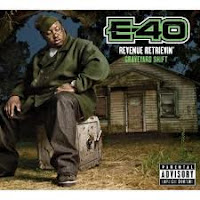
E-40 – Revenue Retrievin’: Graveyard Shift

Original Review Here

Right now, I’m working on a review compilation of E-40’s Revenue Retrievin’ series, so it’s fitting that this album should appear in this segment. We know that E-40 felt like releasing two albums on the same day last year and now two albums on the same day this year. This year’s Overtime Shift is the clear best of all four, so, thusly, Graveyard Shift should be completely ignored. Well hold on a second, not so fast. Graveyard Shift may not be as colossally satisfying as Overtime Shift, but it’s still a great album. Tracks like “E-40” and “My Shit Bang”… well, bang, and I’m not going to just sit around and watch people disparage it just because its companion piece is the musical equivalent of the doctor brother that the family keeps complimenting at Thanksgiving dinner. Graveyard Shift may not be as fruitful as Overtime Shift, but, if you’re an E-40 or just plain old hip hop fan, it’s a no brainer to get. Who knows, you might even enjoy it more.

Lupe Fiasco – Lasers

Original Review Here

LOL REALLY? I like thought this album was total shit! Lupe goes mainstream? HOW DROLL!!!!!! How could it possibly be on any honorable mention list? RU some kind of Lupe Fiasco fanboy or something? Well, yes, but that’s beside the point. We can get into a conversation as to whether it was right of Lupe Fiasco to go in the direction he did for his third album, Lasers, but there is no denying that, nevertheless, it is a very solid album. It sounds nothing like his magnum opus Food & Liquor or the comparatively disappointing The Cool, but it still observes Lupe in fine lyrical form over hooks that are actually quite catchy. So what if it works better at a club than a house party this time around? Does that make it worse? It doesn’t, so don’t believe the anti-hype. Lasers is a worthy addition to the Lupe catalogue, and I’m glad he’s back in the hip hop conversation.

Julian Lynch – Terra

Original Review Here

June 12th

Check Your Mode: Hey Julian Lynch.

Julian Lynch: Ummm, yes?

Check Your Mode: I wuv you.

Julian Lynch: Well gee… thanks.


July 7th

Check Your Mode: Hey Julian Lynch.

Julian Lynch: Yeah?

Check Your Mode:


:)


Julian Lynch: *sigh* Thanks.

Primordial – Redemption at the Puritan’s Hand

Original Review Here

Because I am constantly making lists and categorizing the music that comes out of the 2010’s, comparisons are inevitable, and the biggest may be 2010 overall vs. 2011 overall. It’s a valid query, but one that cannot be objectively inspected, because there are too many variables. However, I can safely say this: In terms of metal, 2010 definitely has the upper hand. By this time last year we had fantastic releases from Barren Earth, Stam1na, Triptykon and Nachtmystium. As of now, we only have two outstanding releases from Moonsorrow and Septic Flesh. Things can change of course, but I’d be lying to you if I didn’t say I was a little disappointed, being an enormous metal fan and all.

In terms of quality, Primordial is in a run for third place for best metal album so far (In a dead heat between Devin Townsend and Týr). The Irish metal group’s seventh album slays like their others, trudging through lands of distortion and double bass drum to deliver blows and vanquish enemies with the uniting power of massive balls. Singer Naihmass Nemtheanga rants at you to an almost numbing degree, but it’s all motivational, so it’s all good. Redemption at the Puritan’s Hand makes you less want to destroy shit than spout rhetoric at that shit until it realizes its life is worthless and decides to shy away and kill itself. Not much music does that, but, if there’s one thing you need to know about the newest Primordial album, it’s that it succeeds at it. Oh yes does it succeed.


Share/Bookmark

The Antlers - Burst Apart: B / Malachai - Return to the Ugly Side: B / Snowman - ∆bsence


Space is a wonderful thing to have on an album. It makes music more fluid, keeping the pace interesting. I cannot tell you how many albums I would have enjoyed if only they paused a moment from their unrelenting onslaughts; in many cases, a little space can go a long way. Many albums like that have crossed my path, and yet, I have heard ambient albums that feel like glorious translucent space that drifts through my speakers to give me a floating feeling, although it is clear I am listening to something substantive.

But it should always be noted that space is what it is: Nothing. And too much of nothing tends to swallow something, and good albums can be diluted because they yield too much of their running time to it. The newest albums by The Antlers, Malachai and Snowman all remind me of what can happen when space suppresses potential as opposed to enlivening it. Their approaches are different, but all are ultimately albums that feel incomplete because space is too involved a component of them.

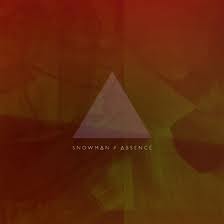
Snowman broke up before the release of their second album, ∆bsence, but you wouldn’t know it from listening to their final project. Not to say that an album like this has to convey the tension I’m sure was building within the group during its making (After all, the final releases of groups like Fang Island and Yellow Swans gave hardly an indication of intra-group turmoil), but, there’s absolutely no tension to be found on the album, at all. What you mostly find are vague textures of keyboards, percussion and guitars. Falsettos abound through mountains of reverb with no notable distinctiveness. The album goes on like this and nothing happens time and time again. When the closing title track “explodes” with some unexpected distortion, it just feels like throwing a stone into an empty pool; it’s a loud “clank” and that’s it. No ripple, no nothing.

Malachai have a slight upper hand in that they at least observe some personality on their sophomore LP, Return to the Ugly Side. The album’s fidelity makes the music akin to lo-fi AM radio pop but with an erudite British edge, lead singer Gee Ealey’s nasally cockney sounding like what would happen if Oliver Twist joined a post-punk band in adulthood. However, while “Monster” features some bludgeoning percussion and “Mid Antarctica (Wearin’ Sandals)” has some gruff guitar riffage, Return to the Ugly Side also succumbs to the space of anonymity. Much of the album sounds like Britpop retread, and Malachai don’t do a very good job of convincing you otherwise. Return, ultimately, sounds like a series of Gnarls Barkley outtakes. Their vague 60’s aesthetic is held up defectively by a stale personality. Like Snowman’s “Absence”, “HyberNation” attempts to surprise the listener with some breakbeats, and, while, admittedly, it comes out of nowhere, it hardly saves Return from its mediocrity. It’s hard to see the album being enjoyed as anything but background music.

Coming to prominence with their 2009 debut, Hospice, The Antlers drew ears with plodding melodies and singer Pat Silberman’s devastating tales of loss and dejection. If you have read anything about the group’s Hospice follow-up, Burst Apart, it’s that, to an extent, it’s more of the same. I would agree with this sentiment; the group’s instrumentation remains tempered and Silberman’s falsettos remain nimble and affecting. In fact, Silberman does a fantastic job on Burst Apart. Many artists strive for delicacy, but he goes all-out, descending upon tracks like “No Windows” to give them a beautiful, sinister bent. It’s shame, then, that, despite the vocal acrobatics Silberman observes on Burst Apart, so little happens on the album. “No Windows” could be transformative if its expanse of organs and mechanized percussion weren’t so repetitive. Songs like “Every Night My Teeth Are Falling Out” and “I Don’t Want Love” should be distressing admissions of sexual frustration, but their arrangements are shy, almost cowardly. Even as Silberman gives his best lyrical performance in the first verse of “Putting the Dog to Sleep”, its impact is dulled by the sheer modesty with which the group accompanies it. The track embodies the mission statement of Burst Apart: A great album by a group with a talented singer marred by the low ambition of its more than competent instrumentalists.

Share/Bookmark

Monday, July 4, 2011

Tyler, the Creator - Goblin: B+


In a March promotional video for Goblin, Odd Future ringleader Tyler the Creator’s second solo album, the man sits at a piano and performs an acoustic version of his first prerelease single, “Yonkers”. It’s a genuinely surprising rendition, not just because it puts one of the most caustic songs of the year in a much different light, but because of what Tyler says before he begins. “Right now, today,” he says, wearing a fake mustache, leaning into the camera. “I am nineteen years of age.” That just kinda floors me. The guy who has become the poster boy for one of the most invigorating counterculture movements in rap music in quite some time… is a month younger than me. I’m sitting at a computer like a dope, discussing the implications of a rap group that rocketed to fame with an appearance on Jimmy Fallon, and some of its members could have been in my high school graduating class.

We tend to forget that when we talk about Odd Future and their milieu of controversy. The argument that the group is too adolescent to fully comprehend nuance has been considered a copout from critics of Tyler and Odd Future’s vigorous talk of rape and gore, but they really are just kids. Some tracks on various Odd Future releases have been some of the most memorable lyrical performances of the past few years, but I don’t think it’s fair to expect the group to be constantly mature when it has been hoisted to such prominence at such a low level of artistic maturity. I mean, in Goblin’s “Nightmare”, Tyler talks about drinking alcohol for the first time with all the nuance of an irate middle schooler. Frankly, I’m surprised so many Odd Future songs are listenable, let alone as classic as “Yonkers”. Don’t forget that there was another recent rap artist that became an overnight sensation in his teens. That man was Soulja Boy Tell ‘Em.

So, despite how much I enjoyed and continue to enjoy “Yonkers”, I came into Goblin with low expectations. We’ve all heard the stories of countless albums like it, where an artist gets swallowed by the spotlight and lashes out on the hand that feeds them. Tyler, the Creator continued to be a polarizing public figure up to release of Goblin, from Odd Future’s unhinged SXSW shows to his hilarious Golf Wang commercials. There was a part of me that expected the rug to be pulled out from under him as fast as it was laid out.

Nevertheless, Goblin begins with a fantastic opening track. It sets the scene for the album’s concept, in which Tyler converses with a therapist about all his recent problems, not least of which is his sudden acclaim. He elaborates on his frustration by coloring simple insults with vibrant affectation. His lyrics paint a realistic portrait of a snotty teenager laying on a couch, telling a shrink all his secrets, and hating every moment of it. “Life’s a cute bitch full of estrogen,” he sneers. “And when life gives you lemons fucking throw them at pedestrians.” Tyler speaks candidly about his disenfranchisement with the new friends he’s made, but nothing is quite as effective as when he references his skate-rap roots. “I can’t even skate anymore, I don’t have the time,” he laments. “I can barely kickflip now.” Tyler’s performance on “Goblin” pretty much validates all the immense Odd Future hype. When his therapist responds after his massive rant, “So, you were telling me you went to New York?” and the first rattles of “Yonkers” come in, it feels like Goblin is poised to be the rap album of a generation.

I once read a review of “Yonkers” that described the track as being forced to stay in a room with a raving lunatic for four minutes, an image well buttressed by the song’s video, in which Tyler, the Creator vomits and literally hangs himself in front of the camera. It’s an excellent interpretation, especially considering that the track really has no meaning. From “Buck 50” to “A Milli”, before it, “Yonkers” comes from a long line of rap songs that have been fantastic for their incredibly memorable (but only semi-coherent) word scrambles. The track definitely embodies a raw emotion, but, taken as a statement, it’s difficult to tell whether “Yonkers” is anything other than a big, hot, brilliant mess.

The tracks that succeed “Yonkers” are, for the most part, good, but, with repeated listens, one cannot help but feel as if Tyler is slowly but surely chipping away at the magnum opus that Goblin could have been. Third track, “Radicals”, is a murky, agro-punk tirade, but it feels hokey and doesn’t hit very hard, a sentiment not helped by the “random disclaimer” that begins it. “Her” is redundant melodrama that ends in anticlimax. Even thought it’s probably a joke, the Waka Flocka Flame-aping “Bitch Suck Dick” is a complete waste of space. For the most part, Goblin is efficient over its fifteen tracks, but it’s a much lower kind of efficiency that is, unfortunately, more inclined toward my low expectations.

And what is critical about this is that, as the tracks start to sound slightly undercooked, it becomes more difficult to justify the outright sexist, racist and Dadaist behavior that Tyler observes throughout the album. In “Tron Cat”, Tyler’s over the top threats of “fucking dolphins” and “snorting Hitler’s ashes” are understandable, because it’s clear he’s joking and there’s enough satire in his delivery to make you want to laugh with him. In one of the track’s best lines, Tyler pokes fun at himself by boasting, “You niggas rap about fucking bitches and getting head / Instead I rap about fucking bitches and getting head.” But come track ten, when Tyler’s listing racial slurs in the otherwise innocuous “Fish/Boppin Bitch”, it becomes a chore to defend the guy’s ideology, let alone enjoy the music for what it is.

Also, a glaring flaw of Goblin, which I’m surprised few have been talking about, is that many of its tracks’ productions are variations of the same beat. However different their mission statements may be, “Yonkers”, “Radicals” and “Sandwitches” are all made up very similar components. It’s that vague boom bap with intentionally (or at least I hope) cheap synthesizers that soften Tyler and his guests’ gruff couplets. I have no objection to the lo-fi sound, as it is in line with OF’s DIY aesthetic, but the creative bankruptcy becomes quite apparent after multiple listens. And since we’re on the subject of crappy production, whenever OF crooner Frank Ocean appears on a track, it immediately sounds half-baked. Ocean tries to channel a Trey Songz-like quivering timbre, but just ends up sounding flat and amateurish in ways that distract from an otherwise decent track like “She”.

Goblin only truly redeems itself at its very end, when the album returns to its storyline in ensemble track “Window” and final track “Golden”. Tyler’s therapist reprises his role as moderator on the former and Domo Genesis fantastically begins the track with a deadpan, “It was all a dream.” Domo, Hodgy Beats, Mike G and Frank Ocean (who thankfully only raps here), are all competent at their respective guests spots, but it’s the track’s hazy, lurching beat that carries them all, its eight minutes breezing by as Tyler eventually takes the reigns for one of Goblin’s best performances. “Since I’m saying ‘Fuck everybody’ I guess that means I’m a fucking pervert,” he seethes. In the track’s final minutes, Tyler’s anger becomes so unbearable, he proceeds to kill all his guests one by one. “Golden” similarly finds Tyler building tension as his diatribe becomes more vitriolic, ending in a plot twist that would certainly befit Goblin: The Masterpiece. If the album were only comprised of the four tracks that bookend it, I’d probably deem it a classic EP.

Goblin is one of those albums that I would recommend in layers. If you want to browse some of the most contentious music of the decade/year, again, The Goblin EP would be your best bet. If you are already familiar with OF, you can’t go wrong with “Tron Cat” and Hodgy Beats collaborations “Analog” and “Sandwitches”. And if you’re a Tyler, the Creator devotee, you probably already have and love Goblin, and for that you have my sympathy. Not because it is a particularly bad album, but because it will always be a chore to fiercely defend a product that’s controversy has stemmed its own controversial controversy.

Share/Bookmark

Thursday, June 30, 2011

The Vaccines - What Did You Expect From The Vaccines?: B+

It’s funny talking about What Did You Expect From The Vaccines? now, as the group that NME had crowned “The Return of the Great British Guitar Band” has all but fizzled out in the six months or so since their debut album was released. Listening to the London group’s newest, one will note that all the hype that was hoisted upon them was probably not warranted. This is not because the group’s debut is particularly bad, but because it is very much a “little” album.

You know, a “little” album. One whose creators intended to lay down a long player’s worth of songs for the joy of making music and perhaps some naïve ideas of rock and roll stardom. With it, you got some clever lyricism, a charismatic but introverted leader, maybe some nifty guitar solos. It’s by no means distinct, but, then again, it never aspires to be. What Did You Expect features all these elements to some extent, giving more credence to the album’s sarcastic title, and yet The Vaccines were still forced into the stratosphere before they had gotten remotely close to honing their craft. It’s no wonder American audiences have yet to be turned on to them.

It should be noted that What Did You Expect is still quite good, despite its modesty. It’s loaded with solid melodies and that aforementioned clever wordplay from frontman Justin Young. The group sounds like prime Futureheads as they spell out the name of the titular model in “Norgaard” and the bluntness in the chorus of “Post Break-Up Sex” (“Post break-up sex / That helps you forget your ex / What did you expect / From post break-up sex?”) is refreshing, even if it sets the depth bar pretty damn low. Young’s ruminations on “Family Friend”, (“Do people really feel as high as a kite? / I don’t know if they do but they might”) ain’t exactly Nietzsche, but the track has a precocious theatricality to it that still makes it an enjoyable listen. Call it froth, but sometimes froth tastes really, really good.

On paper, The Vaccines sound like a group that should be dismissed, immediately. However, six months in, What Did You Expect is still worth the time. It may not have the bombast of Oasis or the pseudo-wryness of Arctic Monkeys, but The Vaccines’ newest bests both Suck It and See and the new Beady Eye album by sounding more like a British Yuck (I’m aware Yuck are from the UK, but they play a style of indie rock that is distinctly American), which is still quite satisfying. I feel bad that The Vaccines were subject to that big ‘ol hype machine, of which admittedly fewer and fewer bands seem to be falling victim to, but What Did You Expect is still one of the best of its kind released this year. The great thing about “little” albums like it that set such low goals is that sometimes it’s fun to see them hit the mark every time.


Share/Bookmark

Devin Townsend - Deconstruction: B+

For nearly twenty years now, Devin Townsend has been one of the most confounding artists that metal, or any genre, has had to offer. The man’s newest solo album, Deconstruction, does not sully his reputation in this regard. Many of the album’s tracks feature an unctuous blend of humor and instrumental proficiency. Townsend’s theatrical singing over the double bass drum triplets of “Juular” gives the track a circus-like feel, the man relishing his creepy timbre with every word he speaks. The beginning of “Praise Be Lowered” sounds almost Radiohead-like before it descends into the distorted screams of chaotic black metal. “Stand” and “Planet of the Apes” are crunch-metal odysseys, Townsend recruiting screamers from Emperor’s Ihasahn to Between the Buried and Me’s Thomas Giles to give each track a grainy edge. It’s no surprise that Deconstruction feels like a massive stage production, a fitting end to Townsend’s madcap Devin Townsend Project series.

But I’m telling you right now that you’re not going to remember Deconstruction for those tracks I just mentioned. The seven songs on this nine-track album? Nonsense. In fact, in retrospect, the hushed acoustics that conclude “Sumeria” sound like a primer for where the real album begins.

The true Deconstruction begins with the slow guitar picking of “The Might Masturbator”. The track builds to standard but complicated prog metal, but completely dismantles itself five minutes in to reveal a country tootin’ Townsend, tongue firmly in cheek, as he brags, “Oh yeah, you don’t even know / I’m real good at that savin’ the world thing / I’m ready, I got my savin’ the world boots on.” And then the track just goes bonkers. First it’s Dream Theater-like time signature perversion, then Broadway “sha la la’s”, then an electronic siege of insanity as Townsend blusters on about addressing “the intergalactic community” which all leads to a chant of “Give it up / The world”… THEN the track goes back to prog metal before Townsend literally fancies himself a ringmaster, talking about men with sixteen testicles and vagina-faced women before the fucker just crowns himself The Mighty Masturbator to a rapturous AMEN. Next track “Pandemic” never stands a chance.

Now would be a good time to note that there is also a concept behind Deconstruction. As if the album couldn’t sound more convoluted, its accompanying storyline may be even more ridiculous than all the sounds Townsend throws at you combined. Deconstruction is about a boy who goes to the Underworld in search of the answers to the mysteries of the Universe and is offered them in the form of a cheeseburger, only for the protagonist to reveal that he is a vegetarian (or as Townsend pronounces it, “vegemetarian”), rendering his entire journey utterly worthless. With that in mind, it sounds like Townsend is just fucking with us at this point, dickslapping our conventions of how seriously we take any kind of art.

And if you think that this concept is difficult to understand, don’t worry, because Townsend lays it out for you by literally interrupting a track to reveal the story’s punch line, and you will hear full choirs singing about cheeseburgers like it’s all a fucking coronation. The title track, where the crux of the story is told, bests the batshit crazy factor of “The Mighty Masturbator” not only because it’s more blatant in its display of lunacy, but because Townsend and his band perform the thing with surgically precision. As Townsend rants about what the main character could do with his knowledge, the drums punctuate his fantasies of SEX and MONEY with snare hits that seem to come out of nowhere. But if you’re getting the impression that, other than the storyline, “Deconstruction” is all poise and finesse, the song literally starts with Townsend laying a massive fart, and the last thing heard on the song is a man repeating, “Bullshit, it’s bullshit.” Again, a song succeeds this track, but would you really care if I told you about it?

So, clearly, Deconstruction is a lot to take in. It intends to probe listeners relentlessly on how far they will go to appreciate music that refuses to back down from even the basest forms of humor. I came very close to not rating Deconstruction, because its incessant need to make disjointed and patently ludicrous statements almost defies critical inspection.

Realistically, however, the actual hooks and songwriting chops of Deconstruction do not quite impress as much as they shock. “The Mighty Masturbator” and “Deconstruction” are both fantastic songs, and, while they do make up twenty-six minutes of the album, its other tracks look insignificant in comparison. However, I will say this: If you think Lady Gaga is challenging ideas of what is and is not music, a few listens to Deconstruction will inform you that’s all a hulking pile of horseshit. Townsend had some massive balls to make an album like Deconstruction, and, based on its meticulous production, its message-without-a-message actually sounds thought through and it sounds like Townsend had great fun making it. Despite the fact that there is a good chance you will despise Deconstruction, I would recommend it, because it is a legitimate challenge to our conventions on music. You may not enjoy it, but you cannot deny that you’ve never heard anything quite like it before.


Share/Bookmark

Bon Iver - Bon Iver, Bon Iver: A-


The success of For Emma, Forever Ago has always baffled me. The album was released in mid-2007 to minimal acclaim, but, sometime in early 2008, Justin Vernon, the man behind Bon Iver, was beginning to get namedropped by friends and family that I had never figured knew all that much about music. Perhaps it took the winter of 2008 to be the catalyst for For Emma’s frigid tales of isolation to realize their potential to people, but, by 2008’s end, Bon Iver had become as much of a household name as Vampire Weekend, whose debut was released about six months after Vernon’s.

And then Justin Vernon was on My Beautiful Dark Twisted Fantasy. Yeah, Bon Iver came out with the Blood Bank EP and Vernon released two side projects under the names Volcano Choir and Gayngs in that time, but what really matters is that the man who had created a mythos of holing himself up in a cabin with a crippling physical/mental ailment to release tortured acoustic tales was singing “Pussy and religion is all I need” alongside some of the most recognizable pop figures of all time in all but a few years. The albums that were released between For Emma and Fantasy gave hints of the deeper breadth to which Vernon could perform, but I would still argue that Vernon’s creative shift between 2007 and 2010 was one of the most radical of all time.

And this radical shift has a subtle effect on Bon Iver’s highly awaited, pseudo-self titled follow-up to For Emma. Vernon has mentioned in interviews that the main thing he took away from working with Kanye was that the man was incredibly willing to take strange, seemingly unworkable sounds and tirelessly mold them into affecting showstoppers. This principle is heard throughout Bon Iver, Bon Iver, particularly on the album’s first and last tracks. “Perth” begins with a strategically caustic guitar line and undulates with snare hits and harmonized falsettos. At first, the track sounds like expected Bon Iver, but, at its midpoint, it slumps sonically, only to be revived with concise cymbal hits before gliding into a breakdown of syncopated double bass drum. Taken out of context, this new movement sounds like some downtempo heavy metal, something that wouldn’t sound out of place on Alcest’s most recent record. However, coupled with Vernon’s immaculate guitar tone, this new presence adds serious emotional heft. The sound carries “Perth” to its end, introducing Bon Iver, Bon Iver with a jarring contradiction that proves to be the album’s best.

Where “Perth” borrows from the hipster-reviled reaches of metal, “Beth/Rest” takes its sound from the maligned cheese of ‘80’s analog schmaltz. It’s a ballad, featuring a keyboard line that’s connotation is nearly impossible to ignore. Nevertheless, Vernon achieves the impossible by reversing entire decades of Bonnie Tyler and Foreigner ballads to give the characteristically synthetic sound an undeniable soul. Vernon understands the style very well and almost seems to taunt the listener as he embellishes the track with reverbed guitar high tones, but it’s still an unbridled success. It too proves itself to be one of Bon Iver, Bon Iver’s best songs, because it ruthlessly doubles down on polarizing styles and normalizes them so that you couldn’t imagine them being performed any other way.

The rest of Bon Iver, Bon Iver (Promotions are calling it Bon Iver but Vernon himself calls it Bon Iver, Bon Iver) is less divisive. Vernon has characterized his newest as a spring to For Emma’s winter, but the album gives little indication of weather or even temperature. Instead, the season Vernon evokes on Bon Iver, Bon Iver lies within the mind; constantly, the man recalls cryptic moments in his childhood amidst arrangements that have a blue, polished sheen of nostalgia. A bike bell rings throughout “Michicant” as Vernon recalls when “I was unafraid, I was a boy, I was a tender age.” “Halocene” delves into tender specifics that I’m sure only Vernon truly understands. A line like “3rd and Lake it burnt away, the hallway / Was where we learned to celebrate,” has little relevance to me, but Vernon’s vulnerable delivery aside the naked acoustic guitar creates a recognizable mood that I can easily ascribe my own meaning to. In this way, it often feels as if Vernon is translating his own memories to yours.

“Calgary” even begins as if from the middle of a thought. Vernon’s verse enters a line late, causing the track to stumble slightly before its familiar vocal progression gets into a groove. As the last track before the controversial tones of “Beth/Rest”, the song feels as if it is wrestling itself from a dream. Its bridge bounces with distorted guitar and distant vocals, as if to signal reality intruding upon Vernon’s fantasies that flew with such abandon up to that point. What is incredible is that you feel intruded upon as well, drawing attention to how effectively Bon Iver, Bon Iver introduces you to the recesses of Vernon’s psyche. With repeated listens, “Beth/Rest” even wears less and less to make the entire album feel like an immense, uninterrupted dream sequence.

But, yeah. Naked. That’s an excellent way to describe the appeal of Bon Iver, Bon Iver. Vernon’s voice is similar to TV on the Radio’s Tunde Adebimpe, especially in the few times he lowers his voice. It’s delicate and rarely unadorned, ornate harmonies surrounding it constantly as to sound synthetic at times. New instruments such as a horn section and the stylings of bass saxophonist Colin Stetson can be heard throughout the album, but these developments never distract Bon Iver, Bon Iver from that central vision of one guy with an acoustic guitar, except maybe now it’s a guy with an acoustic guitar and a Macbook Pro. Thankfully, Kanye hasn’t spoiled an artist that is proving to be one of the most formative of this decade. His versatility has allowed him to take disparate influences and create a product that still feels wholly his, beautifully marred by the travails that are only garnered from an artist that is honest with both himself and his eager (and appreciative) audience.

Share/Bookmark

Friday, June 24, 2011

E-40 - Revenue Retrivein': Overtime Shift: A / E-40 - Revenue Retrievin': Graveyard Shift: B+


Much like Robyn’s Body Talk was a perfect encapsulation of every facet of an artist’s personality, Revenue Retrievin: Overtime Shift explores every aspect of Bay Area rapper E-40, the man painting himself as a thoughtful and clever savant, no matter what situation in which he finds himself. Fans of his know that the guy has a slippery flow that bounces between syllables and relishes consonants like the candy centers of words. He has a conversational drawl, but raps quickly, combining rapid lyrical runs with accessible wordplay that’s surprisingly easy to follow. With this voice, E-40 brings a varied sensibility to all the subjects of Overtime Shift, and slapdashes his way to rap superiority on them all.

There are a lot of E-40’s on the twenty tracks of Overtime Shift, so allow me to brief you on the most affecting. Many of the album’s tracks have subjects of typical gun and drug talk, but E-40 has the lyrical acumen to make them all sound fresh. E-40’s been on the drug circuit for so damn long, he says he, “probably sold your family member drugs,” on the amusingly blunt “Drugs”. On Overtime Shift, you’ll find E-40 “punkin’ ‘em out”, “hustlin’ all summer, grindin’ all winter”, “hotter than the left sink handle” and “making records before some of ya’ll was in your daddy’s nutsac.” All lively insults using inventive vernacular, all direct quotes from songs on Overtime Shift.

However, E-40 also observes significant depth on the album. The hilarious “Me and My Bitch” depicts the man’s love/hate relationship with his girl, but ultimately maintains his love for her and even her family in one of the final verses. “But for the most part we cool and I respects they gangsta / I got a baby by they sista we family I ain’t no stranger.” Later, E-40 honors his momma in “Love My Momma”, and the song’s presence doesn’t sound tacked on or superfluous. When he responds to insults about her, he doesn’t rattle off curses, but vindicates his guardian like the sweet momma’s boy that he is. “Talk about my momma / They probably shouldn’t do that / My momma good people / Give you the shirt off her back.” It’s a loving tribute amidst the drug talk and cursing, but it still feels appropriate. In it, E-40’s bouncy cadence sounds endearing where elsewhere it would be menacing.

This results in an intriguing contrast throughout Overtime Shift. On one hand, E-40 makes a great case for himself as the most dangerous man this side of Vallejo. On the other, he’s a caring father, born in the struggle, looking out for himself and others while still keeping his humor and wits about him.

Admittedly, though, Overtime Shift wouldn’t be nearly as fantastic if it weren’t for the inventive beats. “Beastin”, one of the best tracks on the album, begins with a horn fanfare before descending into a trunk-rattling dance number. “I Am Your” features a faint robotic voice singing the title just audible enough to give the track a post-modern crunch. Last track “Click About It” features rousing group vocals reminiscent of “Night Night” off Big Boi’s 2010 classic, Sir Lucious Left Foot: Son of Chico Dusty. The tracks of Overtime Shift may vary in subject and ingenuity, but what is always consistent on the album is the deafening bass. It shakes my chair as I listen to it at home and dismantles my speaker system as I take it on the road. Overtime Shift is fine for academic inspection, but you’ll never appreciate its true power until you’ve rolled up onto something with it blasting from your dashboard.

With all this mentioned, you’d think that Overtime Shift was its own record, but it is actually one of a four-part series of Revenue Retrievin’ albums, two of which were released last year and one of which was released the same day as Overtime Shift. Graveyard Shift has its own twenty tracks of blistering West Coast hip hop, but, listening to it in the context of its companion, the album can’t help but sound like an Overtime Shift redux. There are songs about hard times like “Trapped” and “Tuff Times” and more boasts that feature E-40’s rubbery lines rebounding off samples, synths and blustery bass. “E Forty” uses a frayed vocal line to propel the track and “My Shit Bang”, a similar sampled hook rager, may be the best track of the entire Revenue Retrievin’ series. The album gains momentum as it goes along, but it’s less of a dark contrast to Overtime Shift than the same story told not quite as well.

Graveyard Shift is still very listenable and features some fantastic songs, but its purpose seems to be evidence of how good of an artist E-40 is that he can release forty songs in a single day and have not one of them be duds more than anything else. It’s not so much where Graveyard Shift fails as where Overtime Shift exceeds in almost every way. As a result, these two albums may seem at odds in terms of quality, but they are still great albums. Moreover, their quality shows that, nearly twenty years into the rap game, E-40’s best years may still be upon him.

Share/Bookmark