Welcome to Check Your Mode

The all-inclusive, ever-changing, and uncomfortably flexible guide to all things music in the 2010's.

Saturday, August 27, 2011

The Throne (Kanye West & Jay-Z) - Watch the Throne


It feels trite to say, but Kanye West really has always been a formative figure in popular music because no one has sounded quite like him. His aggressive, ambitious aesthetic is both immediately identifiable and somewhat ahead of its time. Say what you will about his ability to rap (which has gotten better and better over the years), but the guy could never be accused of complacency in the decade or so he’s been making music. Paradoxically, nothing West has ever made could be considered alien to his body of work; every beat, rhyme, rant and tweet a fitting addition to the legend that has become KANYE WEST.

That’s why I imagine many fans were surprised to hear the Lex Luger-produced “H.A.M.” when it came out as the purported first single for Watch The Throne. It had that take-no-prisoners bass, that apocalyptic choral arrangement and that ominous pinwheel sound that introduced the hook. Put simply, it sounded like a Lex Luger track. Not that Kanye West or Jay-Z sounded particularly out of place boasting interminably within that context, but it still felt a little… unsettling. Kanye’s biggest asset as a beatmaker has always been his delight in combining disparate influences to make something only he could. However, for the first time, it sounded like he was rapping on someone else’s track. But his name was still on it.

The most interesting (but not necessarily best) moments on Watch The Throne, the long-awaited collaborative album between Kanye West and Jay-Z, are the ones when the music sounds nothing like something Kanye West would willingly rap over. The chopped James Brown samples of “Gotta Have It” don’t immediately bring to mind any one artist, but its lumbering swagger has never been ‘Ye’s MO. “Niggas In Paris”, with its chiptune-like synths and “B.M.F”-style bass/bomb’s, sounds like the bloated bombast of a Gucci Mane track. Most likely due to its mixed critical response and chartage, “H.A.M.” has been relegated to a bonus track on Watch the Throne, but, for all intents and purposes, the message the track sends is still very much felt on the final product.

This surprisingly new infiltration into the Kanye West cannon could be due to many factors; an increasingly sensationalistic rap music landscape, commercial pressure, a new collaborator. To some extent, all of these affect Watch the Throne, but I would contend that the biggest reason why a lot of the album dodges that subtle Kanye West flavor for more outlandish statements is because of its whole mission statement. I don’t know if you know this, but Kanye West and Jay-Z are kind of a big deal. If you think that the combination of both their enormous dicks on one record will leave room for a “Homecoming” or a “Hey Mama”, or that Jay and Kanye are willing to pull any aesthetic punches in such a meeting of the minds, then you obviously haven’t been in enough fights.

The most unfortunate moment on Watch The Throne may be when ‘Ye and Jay compare themselves to Lebron James and Dwayne Wade. It’s the kind of blissfully ignorant statement that would send the haters of these two guys and everything this album stands for into a tizzy of dramatic irony-inflamed laughter. Watch The Throne, to its credit, places itself on a lofty pedestal; in many ways it is the most ambitious record either of these guys have put their names on. I don’t know what possessed Kanye to start a chorus with, “This is something like the Holocaust / Millions of our people lost,” and finish it with, “’Till I die I’m the fuckin’ boss,” but it possessed him pretty hard. Otis Redding, having died forty-four years prior to this record’s release, is “featured” on a track, as if its inclusion was the final, baffling tenet in the man’s last will and testament. A look at the album booklet reveals that the record’s cover is actually the gaudy gilding of a picture of budding flowers. If Watch The Throne sucked, the metaphors for music scribes could be effortlessly picked like ripe fruit.

Luckily, Watch The Throne is a very good but nowhere near perfect record. Some of those aforementioned un-Kanye-like tracks prove to be the album’s highlights, and the dynamic between these two hip-hop supernovas remains consistent and enthralling throughout. With both engaging beats and head-turning wordplay, Watch the Throne manages to please both those put off by Kanye West and Jay-Z’s superfluous self-aggrandizement and those who just want to see them dick around. If you take anything away from this review, know that Watch The Throne does not, in fact, cave in on itself, although all logistical statistics would indicate otherwise. Instead, the album’s a worthy, fun one-off that solidifies the power of all players involved.

However, you may have noticed that I haven’t really talked about Watch The Throne with respect to Jay-Z yet. There are a few reasons for this. One is that WTT is the first Jay-Z-helmed record that I have ever listened to in-depth, so with what to compare it and within what context to consider it I do not know. Another reason, though, is that Hova has an especially diminished role on the album. Although Kanye West shows great deference to his Def Jam superior throughout (bro-ing out in the “Otis” video, crediting the group as JAY Z & Kanye West on the iTunes version, etc.), Jay never sounds nearly as animated or memorable as his counterpart. This is best exemplified on first track “Church in the Wild”. Over a looped guitar line that sounds like the riff to Foreigner’s “Jukebox Hero”, Jay introduces the record with a dark but competent verse before handing the chorus over to Odd Future’s Frank Ocean. But then, as if the real track was meant to start at its halfway mark, Kanye rips into the beat with unmistakable fervor. “Coke on a black skin make a stripe like a zebra / I call that jungle fever,” he sneers, establishing the decadence of the proceedings in the only way ‘Ye can. When the track’s over, you remember some Kanye lines and maybe Ocean’s understated coo. But, despite sharing a third of the track’s run time, Jay-Z’s work is less memorable than Rick Ross’s eight bars on “Monster”. And, no, it’s not just you.

Jay’s performances on the record aren’t all bland, however. On “Gotta Have It”, he ponies up admirably to the album’s ludicrous aspirations (“Bueller had a Mueller but I switched if for a Mille / ‘Cause I’m richer” is a particularly grin-inducing line), and the man’s depiction of his upbringing in the otherwise dull “Made It In America” is endearing and (cringe) relatable. Unfortunately, though, the worst moments of Watch the Throne belong to him. His grunts in between lines on “Who Gon Stop Me” are very grating, and, much like thinking about blinking, once you realize it’s happening, it’s very difficult to not notice it with future listens. Couple that with tossed-off swag and planking references, and it becomes clear who the weak link of Watch The Throne is. To put it differently, I doubt I’m the only one who saw this album as a follow-up to My Beautiful Dark Twisted Fantasy as opposed to The Blueprint 3.

It also can’t help that West is absolutely bonkers all over this thing. Where MBDTF felt like the work of a man with everything to prove, Watch The Throne feels like the most victorious of victory laps. I mean, you just don’t beat moments like in “Lift Off” when West goes, “Lift off / Takin’ my coat off (sound of coat wafting in the breeze) / Show all my tattoos / I’m such a showoff,” or in “New Day” when he observes his absurdist politics with, “And I would never let my son have an ego / You be nice to everybody wherever we got / I mean, I might even make him be Republican / So everybody know he love white people,” or when he features a quote from fucking Blades of Glory on “Niggas in Paris”, as if Will Ferrell’s boorish machismo is some batshit foil from a dimension I’ll never understand. Just as this is a different kind of production for a Kanye West album, this is a different kind of Kanye West. Though his memorable lines are not that numerous, it’s hard to imagine an artist who would so effectively take the theme of Watch The Throne to task.

For all this talk of radical changes, though, most of the album will not feel especially strange to those who have already heard music from either of these artists. Those more inclined to the horn-led bluster of “All of the Lights” will enjoy tracks like “Lift Off”. “New Day”, which strains Nina Simone’s “I’m Feeling Good” through Auto-Tune, is reminiscent of MBDTF’s “Devil in a New Dress” and the better moments of 808’s and Heartbreak. Watch the Throne remains consistently good except for the two bragging-absent tracks, “Murder to Excellence” and the aforementioned “Made It In America” (the latter too schmaltzy, the former laying its social commentary on a little too thick for my taste), and the awkwardly gritty “That’s My Bitch” and “Welcome to the Jungle”. Watch The Throne is varied, propulsive and more than a little offensive. Kanye West and Jay-Z prove that they have the might to at least pull off a record like it. Which is great, guys. But if you could just zip up your pants now, that would be even better.


Share/Bookmark

Wednesday, August 24, 2011

Dolly Parton - Better Day: B+


For my generation, Dolly Parton has always been implants first, country singer second. I have always lumped Dolly in with people of deleterious “life story” fame, in which someone’s renown may be sparked by some respectable act or career, but is ultimately carried on from inertia through a series of trivial misdemeanors. For me, Dolly Parton was known more for being number 87 on E!’s list of Most Starlicious Makeovers. I’m not very proud of that fact, but that’s just how things panned out.

The first thing that Parton’s newest album, Better Day, does to those like me is to make them feel sorry for ever thinking that she hasn’t deserved all this attention over the years. Pretty much everyone knows who Dolly Parton is, but you may be surprised to find that she has released seven albums in the past decade. Certainly, this shows she’s been keeping busy just like any other legitimate musician, but what Better Day also makes clear is that Parton doesn’t just phone in her performances or fill in space with hokey covers. First and best track “In the Meantime” is an original celebration of the here and now. “You know people been talkin’ ‘bout the end of time / Ever since time began,” she sings. “We’ve been living in the last days ever since the first days / Ever since the dawn of man.” The track’s message is a nice sentiment, considering the curmudgeon-like dispositions of Parton’s peers (Just ask Merle Haggard what he thinks of all these kids with their loose pants and their hippity hoppity). However, it is also tuneful, because Parton’s excitement is genuine, and her glee is quite catchy.           

Admittedly, though, much of Better Day succumbs to the many cliché’s that tend to produce bland, corporate country. However, the album is wholly reliable, because Parton’s voice remains a strident marker through the songwriting highs and lows. At the age of 65, Parton has a voice that is remarkably distinct and versatile. Her high yelps and peppy demeanor on tracks like “Just Leaving” and “Country Is as Country Does” are both professional and youthful. They are reason alone to listen to every one of album’s tracks, even if some of their instrumentations are made up of little more than dull, Taylor Swift-like power chords romps. Regardless, Better Day is a solid release, if only in Parton exhibiting her still-unabashed personality.  To longtime Parton fans, the album will feel like business as usual.  


Share/Bookmark

Saturday, August 13, 2011

Deaf Center - Owl Splinters: B


Deaf Center are two dudes from Oslo who play dark ambient music using piano and cello. Owl Splinters, their sophomore release, very much continues to mine the rich, unpleasant nethers of ambient music through slight, discordant perversions of both their instruments. If you thought Tim Hecker’s Ravedeath 1972 was bleak, you ain’t heard nothing until you’ve heard ­­­a cello wretch inconsolably on the aptly titled “Animal Sacrifices”. Owl Splinters is a creepy, plodding piece of music. One of its main appeals is its ability to scare you silly in just the right context.

However, without that context – whether it be under the covers or in front of a computer screen in the wee hours of the night – Owl Splinters can wear on you. Much like Max Richter’s recent Infra, these are arrangements that meander and oscillate, building upon themselves with the very quality of their existence. However, the tension that Max Richter built up on his album was disseminated frustratingly and excellently through the use of static and white noise. Deaf Center simply let their textures run wild on Owl Splinters, until, inevitably, they become stale.

This does not bode well for the group when it is clear that their strength lies in short bursts of melancholy. “Time Spent” glides on an ominous piano line, made all the more affecting by the barely audible bass that creeps below it. It’s a well-executed concept, perfect for soundtracking a David Lynch or Darren Oronofsky film, even though it lasts just over two minutes. “Fiction Dawn” similarly places a piano line in a haunting void, and it too gets its point across at just over two and a half minutes.

In contrast, the majority of Owl Splinters is dedicated to massive ambient drones. I know it sounds silly to criticize a dark ambient album for indulging in such, but there is a point where atmosphere gets in its own way. “The Day I Would Have Lived” introduces an interesting concept with a more animated bass and some lingering studio imperfections, but it is far too long to be appreciated by the end of its nagging ten minutes. The eight minute “Close Forever Watching” and six minute “New Beginning (Tidal Darkness)” are similarly overlong and boring, although each has its own rewarding qualities. This key flaw keeps Owl Splinters from being the truly creepy piece of music its ideas attempt to convey. If only the group took more credence from brevity. That way, when those long moments come, they can envelop your sense of time so you won’t ever feel the need to check your watch. 

Share/Bookmark

Tuesday, August 9, 2011

Fountains of Wayne - Sky Full of Holes: C


You are presented with a book, titled How To Be Happy. In it, you find countless diagrams and painstaking depictions of the history of happiness, its many forms, its advantages, its alchemy, its boundaries and potency. The phrasing is eloquent, the characterization inspiring. It makes you feel like you have the secret weapon to a fulfilling life, the current one feeling all the more dismal as you read fluttery page after page. After studying the book for quite some time, you put to practice all the learned happiness that was so meticulously described… and promptly fail at every turn. While what you had read was perfection on paper, it was a one-size-fits-all template for generic happiness. It fails, because learned, objective happiness is just as unfeasible as its sadness counterpart, which I’m sure one book purports to achieve just a few rows down the library shelf.

Fountains of Wayne’s fifth album sounds like the product of a group making music to every detail of How to Make Power Pop. The album is as successful at making affecting music as someone would be good at science if they could say the word in sixteen different languages. After fifteen years of doing this stuff, FOW know exactly how to make a record technically their own. But listening to Sky Full of Holes makes you feel like all time has done is eroded the group’s character until all that’s left are hollow concepts. There’s nothing on the album that wouldn’t be found on the group’s other records; buoyant hooks and dated pop culture references. The only difference is the references are even less memorable (only the Will Ferrell line in “A Road Song” really sticks) and not a single musical idea the group throws at you doesn’t feel tired the moment it lurches through your speakers. If sterile pop is all you expect from Fountains of Wayne, then Sky Full of Holes will be the spackle for your musical drywall. But if you’re looking for anything, and I mean anything, different from this group, then I cannot innumerate how many shits with which you will be out of luck.  

Share/Bookmark

Saturday, July 23, 2011

Yes - Fly From Here: B

At what point are Yes in their career? The long-running prog rock group has not quite become the triumphant stalwarts of their genre like Rush, nor have they become a parody of themselves through embarrassing late-career albums. The mark that Yes has left on the musical landscape is just as unsure; not quite the “dinosaur rock” that has become the ire of many a modern music maker, but it’s not like you’ve heard an artist cite Closer to the Edge as a major influence in the past five years. Perhaps the best place to look for Yes’s influence is in metal, but, if that is so, the genre only takes the general idea of the group’s music seriously; the subtle and more poppy elements that came to define the group’s best work has all but been forgotten. As far as modern music is concerned, it’s difficult to see whether the sway of one of the greatest bands of all time spans beyond just an ace catalogue.

It is for this and many other reasons why Yes’s first album in ten years, Fly From Here, sits so awkwardly with me. While I fully embrace the idea of a comeback from this technical pioneer, in practice, the advantage/disadvantage spread in the album’s layout is just as contradictory as those aforementioned qualities. Fly From Here’s central concept comes from a song that Rick Wakeman replacement Geoff Downes and producer Trevor Horn had been working on before each joined Yes the first time around for 1980’s Drama. Here, it is presented as a twenty-minute song split into five parts, a presentation that would befit a classic Yes mentality. However, Yes frontman up to this point, Jon Anderson, has bowed out due to vocal complications and has been replaced in the dubious Journey style of recruiting a singer from a Yes cover band by watching YouTube videos. While Fly From Here would indicate a return to form of sorts for the group, it also seems like it’s setting the stage for some serious musical stagnation.

And, unsurprisingly, the album’s quality ends up somewhere in the middle. For however interesting the first five “Fly From Here” tracks are, they do begin to sound like they’re going through the motions with only one familiar vocal melody to draw the listener in. While I appreciate the sentiment of these four tracks, much of them could have been spaced out across the album or just omitted entirely. Luckily, though, the album also features a second half of better, standard Yes songs. Benoît David, the new singer, sounds how you’d expect him to: an eerie Anderson copy who brings no new musical ideas to the table. Nevertheless he’s competent, especially in the group harmonies, which are dead ringers for the ones on 1983’s excellent 90125. Remaining members Steve Howe, Chris Squire and Alan White all have their moments. White’s percussion is nimble and fresh throughout, Squire’s bass is particularly lush on “Life on a Film Set” and Squire puts in a moving acoustic performance on penultimate track “Solitaire”.

In terms of great, complete statements, though, Fly From Here is seriously lacking. It’s a very uneven album, so for every time you have a genuinely interesting vocal melody in last track “Into the Sun”, you’ve got David singing about riding a tiger on “Life on a Film Set”. The five-part “Fly From Here” series may center on a catchy hook, but I doubt you’ll walk away from the album remembering anything other than it. From the die-hard Yes fans to the ones that have never heard of them, Fly From Here will invariably come off as a disappointment, which again makes me ponder its existence. Hardly a comeback album, but hardly a debacle, Fly From Here shows a Yes that is giving it a harder try than most of its peers, but only coming up with just slightly better results. 

Share/Bookmark

SBTRKT - SBTRKT: B+

Two months after the second wave of post-dubstep artists inspired debate within the electronic music community, out of nowhere comes lumbering Aaron Jerome, the man behind electronic outfit, SBTRKT. Listening to Jerome’s self-titled debut, it’s clear that the man is operating on the same plane as the purported Holy Trinity of dubstep dilution: James Blake’s self titled, Jamie Woon’s Mirrorwriting and Katy B’s On A Mission. It seems unfair to analyze SBTRKT in constant reference to those three records, but I’m just tactless and hypocritical enough to do so!

SBTRKT, more so than James Blake, Mirrorwriting or On a Mission, tapers to the traditional qualities of dubstep; music not quite made for the mainstream clubs like Katy B’s, but still capable of some pretty affecting grooves. Jerome often features female singers to carry catchy vocal lines and even recruits lauded hip-hop moper Drake to grunt on the “Barbara Streisand”-like “Ready Set Loop”. However, what you will mostly hear on SBTRKT when you are not listening to just straight up instrumental dance music will be Jerome’s voice, which sounds quite a bit like James Blake’s.

Like I mean A LOT like James Blake’s. So much so that it is often distracting. SBTRKT is a very good album; it delivers on many of its clearly identified goals. But the fact that Jerome’s voice has an almost identical tone to James Blake’s throws comparisons by the wayside to make way for debates as to whether or not SBTRKT is simply a more beat-oriented JB offshoot, even worse a mash up record.

Simplified, SBTRKT is just what I described: James Blake’s voice superimposed onto some traditional if tempered dubstep. Its harshness is watered down to suit a more streamlined listening experience, but not so much that it loses its dark edge. The album’s instrumentation is more in line with a sort of downtempo dubstep, like the recent work of artists like Guido, but artists like them tend to make the best music of that genre, so it is very possible that the combination of all these elements will make SBTRKT your favorite of the four records I have mentioned.

Taken as a whole, though, a part of me wants to dismiss SBTRKT because it is very much an album that’s context constantly gets in its way. Regardless, it is a very good product, not as rewarding as James Blake or On A Mission but still worthy of some interest. Perhaps the greatest value in SBTRKT is an indication of the movement from which it was spawned to be sputtering out, because, if artists are going to continue to make music that borrows so liberally from already established artists (or perhaps just James Blake), it’s going to become deformed from inbreeding very, very quickly. But premonition aside, SBTRKT doesn’t quite cross that line, so it’s still OK by me. 

Share/Bookmark

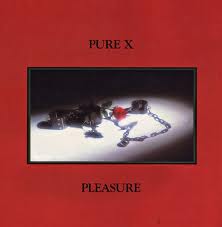
Pure X - Pleasure: B

Get it? X? Pleasure? Ecstacy? Oh man that’s rich.

Music made to be ignored. Don’t bother.             

Share/Bookmark

Gucci Mane - Writing on the Wall 2: B+

Give it time, give it time. I know I said that Gucci Mane’s last release, Return of Mr. Zone 6 was the death knell of the Atlanta rapper’s career, and I still believe that. The fact that the man has followed up that atrocity with his best mixtape to date does not deter me. Just as Rome wasn’t built in a day, Gucci won’t go away with one album. Writing on the Wall 2 will regardless be a reassurance to longtime Gucci fans, and, in some sick way, I feel a little bit of goodness knowing that he can still pump out a considerable amount of above average tunes.           

The album, it should be noted though, is not a vast improvement on Return of Mr. Zone 6 because of anything on Gucci Mane’s part. Rounding up, I’d say that the man comes away with one solid line on the entire mixtape; one line that made me think, “Oh man, maybe I’ve been wrong about this guy all along.” In actuality, what helps Writing on the Wall 2 is that Mane’s presence is relegated to the textural or the background entirely. On the album, Gucci steps aside so that the real talents that have gotten him to this point can shine through.

In this manner, almost all the best parts of Writing on the Wall 2 are the beats. Where Return of Mr. Zone 6 and the majority of Gucci’s 2010 mixtapes were attempts at establishing the now hackneyed Drumma Boy/Lex Lugar constant barrage of sound, Writing shows these beat makers agreeing on a style and then branching them out into more tuneful arenas. On “Guilty” and “Tax Free”, Drumma Boy incorporates piano and synths to add more depth to his regular assault of mindless hooliganism. On “Recently”, he even opts for a smooth bassline to make the track flow like an excellent Curren$y song, all the bells and whistles dropping out to fantastic effect when 50 Cent takes the mic for a surprisingly memorable verse. Needless to say, when “MVP” emerges with a sung hook, it’s an unbridled success, making it an immediate album highlight. 

Drumma Boy’s not the only producer here who takes chances with excellent results. Writing is teeming with subtle risks that consistently impress. Many of the tracks surprise with the inclusion of boisterous horn parts. Their presence on “Hard On A Bitch” is a nice, silly touch on an otherwise tame track. They turn “Play Your Cards” into a veritable epic, with a malicious chorus from YC and a ¾ bass on the verses that adds welcome tension. However, it’s “Brrrr (Supa Cold)” that takes the cake on Writing on the Wall 2. Frequent Gucci collaborator Fat Boy creates a rather buoyant hook that’s harmonized vocals borrow as much from The Beach Boys as Waka Flocka Flame. The verses’ light and playful brass make the track sound like the most streamlined thing Gucci’s ever rapped over. Coupled with characteristically unrelenting bass, I’d say it’s the best track Gucci Mane has ever put his name on. The guy sounds so lively in this environment, it’s a wonder he hasn’t made more songs like it.

Although Writing on the Wall 2 will likely satiate Gucci Mane fanatics, it has many obstacles that will inhibit the uninitiated. While many of the record’s beats deserve praise, songs such as the Fat Boy-helmed “Camera Ready” and Lex Lugar’s “Lil Friends” sound like boring, grating Gucci by numbers. And, of course, considering this is a Gucci Mane release, the man is bound to surface from the background to deliver some truly crass, humorless lines. If you can look beyond terribly derivative couplets like “Pussy, pussy, I smell pussy,” then you’re pretty much in the clear for Writing’s enjoyment. However, if you’re looking for a good rap record in the traditional, lyrically brilliant sense, you’ve been barking up the wrong tree for far too long. Writing on the Wall 2’s positives may override its negatives, but, if you’re expecting more from Gucci Mane than cheap thrills, I’m tempted to ask why you’re reading this review in the first place. 

Share/Bookmark

Sunday, July 17, 2011

Gang Gang Dance - Eye Contact: A


“I can hear everything. It’s everything time.”
I’m kicking myself right now for opening this review with that line, because I know that so many other publications will quote it to begin their own reviews. Despite this, I have made a concerted effort to have it lead into my review, because there is nothing that I could say about Gang Gang Dance’s newest album, Eye Contact, that isn’t already encapsulated by those seven words that begin the group’s fifth release. At once emotionally cold and uncomfortably intimate, Eye Contact is the most jarringly eclectic dance music you are bound to hear this year.

That line comes to introduce first single, “Glass Jar”, a sprawling, eleven-minute behemoth that, like Destroyer’s recent “Bay of Pigs (Detail)”, begins with a cavernous atmosphere of reverberating synthesizers before getting into a groove that is all the more worth the time waited. The guy who utters those words reappears throughout the song’s six-minute build up. He lets out a passionate “Yes” as a musical palette slowly materializes, comforts with a “Don’t worry” and informs us it’s “Dream time” at various points in the song. The aura in which this guy says these things is so precious, it almost feels as if he’s commenting on your lovemaking while he’s in the same room as you. And while that is a radical way to look at “Glass Jar”, it is representative of the song’s humor and its willingness to drop all pretenses, like only the best modern hippies can.

And this is not even with the mention of Liz Bougatsos, the actual lead singer of Gang Gang Dance, whose inimitable coo appears when the beat to “Glass Jar” finally drops. While I could probably count the number of lines she sings on Eye Contact that I understand on one hand, her voice is so emotive that she is just as rapturous as a foreign ingénue as she is as a comprehensible frontwoman. Her indecipherable squeals on tracks like “Chinese High” and “Sacer” sound like an extra instrument, imbuing each track with a new, valued layer of depth. Her vocal presence tends to ground Eye Contact’s songs firmly in the realm of dance music, tying the gleefully disparate ends of “Mind Killa” with the utterance of the song’s title for example. Despite that clear hurdle of comprehension, you will find yourself singing her notes back to her, adding nonsensical words to reconcile their meaning within each song.

But Eye Contact, as that guy so well explains, is a time for everything, and, if you’re getting the impression the album is just some hipster electroclash, it’s far from it. “Glass Jar” does sound like the work of a high-minded outfit of Brooklynites, but it fades into the subversive refrain of a recording of an Italian singer, an intriguing choice of transition into the slippery Eastern guitar melodies of “Adult Goth”. The entire album flows like a DJ set, three interludes giving listeners context before another glorious dance track erupts through their speakers. This dense style of songwriting is most evident in “Mind Killa”, a veritable microcosm of chaos and creativity. It surges seamlessly through about five musical movements, all unique and all infectious. If the song were remixed to about an hour’s length, you wouldn’t need another song to play for a crowded dance floor. Elsewhere, Eye Contact wonderfully contradicts itself from track to track, experimenting with Caribbean jams on “Chinese High”, a spooky organ that would soundtrack a Nikki Minaj-hosted haunted house on “Thru and Thru” and the voice of Hot Chip’s Alex Taylor on the soft rock of “Romance Layers”.

Eye Contact may sound strange on first listen, but its many talents grow stronger with time. The album may very well be a time for everything, but it’s surprisingly manageable, the group very professional in making sure its innumerable elements are all kept in check. The album is very dense and its styles always fascinate and keep the senses sharp with wonder. It’s not as difficult to digest Eye Contact as you may think from this description, but, even if you find that it is, it’s all the more better. Sometimes the senses need to be overwhelmed. Keeps ’em fresh.

Share/Bookmark

Beastie Boys - Hot Sauce Committee Pt. 2: A-


Hot Sauce Committee Pt. 2 is such a return to form for Beastie Boys that it almost works against them. After releasing the middling To the Five Boroughs and the questionable instrumental The Mix-Up, in addition to postponing Hot Sauce Committee for a year due to MCA’s diagnosis of throat cancer, it seemed like the pioneering rap trio was aging in the exact opposite way longtime fans were hoping. But Hot Sauce Committee Part 2 hits so hard with the traditional sounds that made Beastie Boys so unique that it often goes over the nostalgia deep end, making it open game for naysayers who believe the group has long lost its potency. Hot Sauce Committee has a muddy production that can often make the group’s rhymes difficult to hear and the Boys bask in numerous lyrical clichés. As evidenced by “Funky Donkey”, perhaps the most unsurprising Beastie Boys song name of all time, if you were planning on hating Hot Sauce Committee, you’re going to hate it. If you weren’t, then this shit’s gonna be tight.

Despite Hot Sauce Committee’s muddy production, the musical ideas apparent here are positively fantastic and, for me, more of a draw to the album than the lyrical presence of the Beastie Boys, themselves. The skuzzy keyboard riff of “Make Some Noise” is perfect for silly two-steppin’. “OK” combines riffage and wonky synths with ease, consolidating its melodic prowess with a robotic voice that goes “Yeah yeah right right.” “Long Burn the Fire” similarly slays with organ and wah-wah pedal and “Say It” gets its inventive hook from the harmonics of feedbacking guitars. The bass is uncompromising, filling up any available space even when the group opts for full-on punk rock in the “Sabotage”-like “Lee Majors Come Again”.

Admittedly, the Beasties aren’t as memorable lyrically on Hot Sauce Committee. The album has about a dozen total outstanding lines, and they’re more notable for their silliness than their specificity. The album is highly self-referential and revels in throwback hip-hop clichés, so if you’re looking for something to rag on, you won’t have to look very far. The group goes on and on ‘til break of dawn on two tracks and Ad-Rock comes off as a curmudgeon in “OK”’s second verse (“I don’t give a fuck who the Hell you are / Please stop shouting in your cellular/ I never asked to be part of your day / So please stop shouting in your phone, OK?”). The best lyrical work on Hot Sauce Committee doesn’t even come from any member of the group. Nas’s surprisingly skillful verse on “Too Many Rappers” slays from the moment he bursts onto the track with “I have carte blanche.” When he’s finished, you can’t help but wish Beastie Boys were more dynamic on Hot Sauce Committee than just the funny voices they don for “The Larry Routine”.

So, although Hot Sauce Committee is not technically up to par with Beastie Boys’ greatest achievements, it definitely feels like a Beastie Boys album, which is more than enough reason to give it an excellent rating. When the album ends by cutting off the group while they’re yelling over each other, it shows they still have the vigor to be fun and absurd well into their forties. Hot Sauce Committee may lean significantly on spirit, but, man, if you were going to go with one spirit to lean on, you’re not going to find many livelier than the Beasties. The album is an outlier in terms of production and style in the context of where both hip-hop and electronic music are currently going. While we do have a Santigold collaboration here and a Wolf Blitzer reference there, in a way, Hot Sauce Committee brings the old school underground, and I don’t think I’ve ever danced so idiotically to an album so defiant of the mainstream.

Share/Bookmark