Welcome to Check Your Mode
Tuesday, May 17, 2011
Tim Cohen - Tim Cohen's Magic Trick: A-

Monday, May 16, 2011
Live Album Roundup: May 16th 2011


Released: March 8th, 2011
Fuck the haters; Billy Joel is one of the great American songwriters. Modern hipsters like to associate him with the bloated past, but the guy has come to represent New York’s vigor for forty years now, writing dozens of classics and at least one perfect album. True, the guy hasn’t released any new material in nearly twenty years, but the three live albums he’s released since ‘93’s River of Dreams are performances that show that the man’s fantastic songs have aged rather well. Joel can still sing the high notes in the chorus of “She’s Always a Woman” and can play that insane piano riff in “Angry Young Man” with nearly no mess-ups. The guy’s wit is also just as sharp as ever. “You gettin’ married?” he asks a couple I can only assume had gotten engaged during “She’s Always a Woman”. “Get a prenup,” he responds, the irony in proposing during that song not lost on him. As Shea Stadium’s last concert before being torn down, Live at Shea Stadium is a star-studded affair. Garth Brooks, John Mayer and Paul McCartney are competent on their respective songs, but none compare to Tony Bennett, whose duet with Joel on “New York State of Mind” is picturesque. As for the rest, it’s just Joel and his band, free to arrange his classics around any way he likes. 12 Gardens Live may be the better Joel live album to use as a novice’s introduction, but Live at Shea Stadium is still a great product if only to hear Joel reliably tell the crowd not to take shit from anyone by the concert’s end. A-
Deerhunter - Live from SoHo

Released: February 15th, 2011
I wasn’t as keen on Deerhunter’s latest album, Halcyon Digest, as a lot of other people were. While I thought it was very good, it never struck me as exemplary, too vulnerable to filler and shoegaze-y laments. Live from SoHo, Deerhunter’s iTunes-exclusive live EP, takes all the best moments of Halcyon Digest and drenches them in so much sticky atmosphere, it’s a wonder that this recording took place in an Apple Store once you get in the thick of it. With the exception of the bouncy “Rainwater Cassette Exchange” from the group’s EP of the same name, the songs performed on Live From Soho have a consistent style, which doesn’t suggest murkiness in sound, but professional cohesion in the musicians. “Desire Lines” transitions beautifully into “Hazel St.” and, true to the jamming nature of the show, closer, “He Would Have Laughed”, is expanded to over ten minutes before being cut abruptly short, as it does in its Halcyon studio version. These guys definitely have their shit down pat, and if you were already a Deerhunter fan, Live from SoHo should be all the more reason to go see them perform. Halcyon Digest didn’t knock my socks off, but Live from SoHo has inspired me to go see them before their true masterpiece is made. A-
Live Album Roundup: May 16th 2011
Big K.R.I.T. - Return of 4Eva: B+

I should have seen this coming. After blowing up my car’s speaker system over the summer, “Country Shit” was released as an official single in late September of 2010. This was not particularly surprising, as the track was definitely the highlight of Big K.R.I.T.’s debut, K.R.I.T. Wuz Here. However, the single’s cover was a little off-putting, given the context. The picture that was made to exemplify the toughest hip hop song of the year was not of the Mississippi rapper making some badass pose or even standing around some lavish cars like he does on the cover of his newest mixtape, Return of 4Eva. Instead, a single called “Country Shit” had the cover of K.R.I.T. facing away from the camera, a look of contemplation, almost shame, completely betraying the track’s braggadocio. The picture looked less like a countrified victory lap and more like an apology in the vein of the cover of Gucci Mane’s The State v. Radric Davis.
After listening to Big K.R.I.T.’s newest mixtape, Return of 4Eva, released a year after K.R.I.T. Wuz Here, I understand why K.R.I.T. looks far from proud on that cover. During the shooting for that cover, K.R.I.T. was most likely in the midst of writing Return and knew that the song was nothing like what he would release next. His appearance on that cover looks now to be him disavowing the boasting featured so prominently in the track, the rapper embarrassed by the song’s virile immaturity.
Return of 4Eva has no brutal barnburners like “Country Shit”, nor does it have any aggressively dedicated songs like “See Me On Top” or even mid-tempo tracks like “Hometown Hero”. The most aggressive Big K.R.I.T. gets on Return of 4Eva is the ominous bassline to “Time Machine”. Other than that, he’s in full-on relax mode, more comfortable to spit motivational rhymes and critique the rap industry over soul hooks like that of K.R.I.T. Wuz Here tracks “Neva Go Back” and “They Got US”. The man premises “American Rapstar” with a speech about how you have to listen to his songs in full to truly understand them. A song title like “Another Naïve Individual Glorifying Greed and Encouraging Racism” gives off some pretty intense holier-than-thou vibes. K.R.I.T. has a preference for elevated criticism on Return of 4Eva and you get the impression that he wants you to be ashamed of yourself for expecting something as juvenile as another “Country Shit”. Return is Big K.R.I.T. trying to be taken seriously, and, unfortunately, he’s a lot less fun as a result.
However, the songs of Return of 4Eva are good for what they are. About half of K.R.I.T. Wuz Here was made up of serious reflections on the world, his home state and hip-hop, so it’s by no means bad that he’s continued down this route. Songs like “Amtrak” and “Lions For Lambs” would fit well on his debut for their catchy laid back hooks and inventive production. Despite its heavy-handed title, the aforementioned “Another Naïve Individual” is a genuinely affecting track, K.R.I.T. telling various establishments he refuses to be pinned down as an African American stereotype. He’s relatable when he talks about how his mom didn’t want him to rap about faith in “The Vent” and when he builds up a lavish beat only to tear it down as an interrupted dream in “R4 Intro”.
The problem I have with Return of 4Eva is that it has no ballast, no significant shift in style between the romps of self-awareness. As a result, the hazy beats and pleasant rhymes tend to blend together in the album’s second half, their melodies not memorable enough to warrant second listens. Luckily this doesn’t happen enough to turn Return into a bad album, but it definitely keeps it from being the magnum opus many have made it out to be. It also doesn’t help that the times when the album tries to be somewhat rowdy fall awkwardly flat. It’s hard to get past the chorus of “Sookie Now” (add another “sookie” and you got the song’s hook), inconsequential David Banner verse and all. “I put that on my sub” is a strange hook to build a song around, and, unfortunately, K.R.I.T. lacks the charisma to pull off the track titled “My Sub”. Ultimately, many of Return’s songs lack distinction, a quality that can be crippling to an album made up of twenty-one tracks.
So my criticism of Return of 4Eva isn’t so much that K.R.I.T. is trying to separate himself from the shameless posturing of his compatriots, but that he’s trying so hard as to make himself sound self-satisfied and to detract from the core elements that made K.R.I.T. Wuz Here so refreshing. The album does yield a new and interesting face of K.R.I.T., but it is in the moments when he opts for lavish production that sounds like the work of genuine party starters. The beat that K.R.I.T. creates around Return’s intro is ultimately made to be a joke, but it’s invigorating to hear him explain what he calls the “R4 movement” over it, even if it’s for a fleeting moment. “Shake It” is a similarly excellent jam in which K.R.I.T. shows off his suave side, and it’s a triumphant success. The song is one of Return’s highlights and I would be happy to see K.R.I.T. expand upon that style in his next release. However, based on the great seriousness K.R.I.T. attempts to get across on Return of 4Eva, I wouldn’t hold my breath.
Big K.R.I.T. - Return of 4Eva: B+
Saturday, May 14, 2011
Low - C'mon: A-

Low - C'mon: A-
Friday, May 13, 2011
Cunninlynguists - Oneirology: A+

Cunninlynguists - Oneirology: A+
The Mountain Goats - All Eternals Deck: A-

The Mountain Goats - All Eternals Deck: A-
The Weeknd - House of Balloons: A-

The Weeknd - House of Balloons: A-
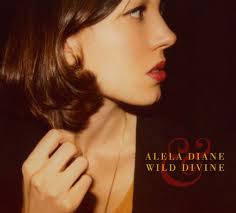
Alela Diane - Alela Diane & Wild Divine: B+

An album so indistinct that the artist had to repeat her name in the title to remind the listener who they’re listening to. Alela Diane & Wild Divine is a very pleasant, very tuneful piece of country-tinged lite rock. However, it’s highly forgettable and people will come out of it remembering what it stands for more than what it actually is. Amidst the competent arrangements, Diane has some pretty clever lines like “Death is a hard act to follow” and “She’s looking like it’s 1995,” but they’re buried in there, tough to find if you’re not looking. The unfortunate thing is that people won’t inspect that much of Wild Divine, and, frankly, I don’t blame them. This album is somewhere in quality between Laura Marling’s I Speak Because I Can and The Watson’s Sisters’ Talking to You, Talking to Me, so my suggestion would be to get the former and leave it at that. While not bad, Wild Divine could use more definition, considering there are literally hundreds of albums like it. In the end, you know the drill. Just because it’s agreeable background music doesn’t make it necessarily worth your time.
Alela Diane - Alela Diane & Wild Divine: B+
Tuesday, May 10, 2011
Times New Viking - Dancer Equired: B+

Times New Viking - Dancer Equired: B+
Okkervil River - I Am Very Far: B+

In the relatively short while that I have been listening to music, I have never heard of a band that has received as many positive accolades but has conversely come off as indistinct as Okkervil River do on their newest album, I Am Very Far. On it, for the most part, these Texans sound like a less charming Franz Ferdinand, lead singer Will Sheff’s smoky swell of a voice a clear reference but a significant step down from that of Alex Kapranos. The instrumentation of I Am Very Far supports this characterization with understated arrangements that are heavy on bass and acoustic guitar, allowing for Sheff’s vaguely clever ramblings to emerge center-stage. “Piratess” is a slinking bass-led number that is executed well, but I can’t listen to it and not think about how well it would fit on Franz’s 2009 album, Tonight. Listening to much of I Am Very Far, it’s hard not to be reminded of that group and think of how much better they could have made these largely modest songs.
When Okkervil River don’t sound like a conservative Franz Ferdinand, they gravitate toward the styles of other aught’s stalwarts as opposed to establishing their own. They sound like a tempered Arcade Fire on “Rider” and The Walkmen on “Hanging From a Hit”. While sonically pleasing, it’s a wonder why I don’t just put on the records of those very same bands instead of listening to this.
It’s difficult to pin down the exact “Okkervil River sound” based on I Am Very Far, but there are some indications that don’t immediately hearken back to groups established six or seven years ago. “White Shadow Waltz” is an eccentric taste of avant garde theatrics, Sheff emoting the rather strange line “The doorbell is ringing / Go see who it is” amidst crashing sound effects that seem to underscore a cryptic narrative. “Rise”, the album’s closer, begins with an unsettling call-and-response between Sheff and himself that devolves in a hackneyed flailing of piano and drums. These tracks seem to define Okkervil River as a band that prefers the dense and cinematic, and, for the most part, these elements work in their favor. However, this is not the case with “We Need a Myth”, a song whose ethos I could imagine being sung by a sloganeering politician in a musical. The repetition of the song’s title becomes tedious quickly and becomes a strain on an already tenuous premise. “We need a massive lift,” Sheff sings at one point in the song. And a myth is supposed to do that? The song gives no indication of sarcasm other than its inherent theatricality, so its thesis comes off as disingenuous. If untenable bombast is supposed to be these guys’ trademark, they need to give their songs more space for the humor to make itself known.
It should be a testament to the inconsistency of I Am Very Far that its best track does not even adhere to the sound established with “White Shadow Waltz” and “We Need a Myth”. “Wake and Be Fine” is a quirky number, interchanging guitar and piano notes while Sheff preaches a catchy vocal melody before descending into an instructive chorus that encourages the suggestion in the title. It’s a really good song, but it sticks out like a sore thumb on I Am Very Far, an album that starves for a clear focus. Okkervil River don’t seem to have a defining quality aside from a singer who can’t help but come off as sloppy and a musical technique that implies one of the guys probably went to Tufts. I Am Very Far is produced well and has some truly excellent moments, but it’s too uneven, more of a transition record than a unified statement.
Okkervil River - I Am Very Far: B+