Welcome to Check Your Mode

The all-inclusive, ever-changing, and uncomfortably flexible guide to all things music in the 2010's.

Saturday, May 21, 2011

TV on the Radio - Nine Types of Light: B+

Like M.I.A. and, I guess, The Field, TV on the Radio has had a rancorous relationship with myself. They’ve been one of those groups to me that I’m sure every music fan has encountered that the people and critics around cannot stop raving about, but I cannot fathom how anyone could find them tuneful, let alone outright enjoyable. Coming into Nine Types of Light, TV on the Radio’s fifth album, I had a very distinct idea of what this group was going to sound like. I was expecting the outrageous, the flamboyant and the needlessly weird. If I didn’t have a heinous headache by this album’s end, I would probably pass out from boredom sometime in its middle.

That gaudy TV on the Radio shows up on about half of Nine Types of Light, which is probably why it is their worst received album to date. The group opts for tempered balladry as much it does for uproarious calamity. To their credit, now more than ever, it sounds like the group has enough of a grasp on their sound that they do not have to constantly puncture pleasure centers to distract from what they lack, which, to me, was always consistency. If it’s not as ridiculous as fans would have liked, it’s undoubtedly reliable, a sentiment that more than exceeded my expectations coming into the record.

I’m not even partial to either style featured here. The more active numbers confound my impression of the group by being fun and hardly grating. “Hey girl don’t mind the noise,” lead singer Tunde Adebimpe intones at the beginning of “New Cannibal Run”. “It’s just the sound of being dragged to Hell.” In that track, he sounds like a crazed Tone Loc over a deviously fuzzy bass line that shows off a humorous side I didn’t know the group could have. Adebimpe is particularly impressive on this album, his voice crisp and expressive enough to be the focal point of most of Nine Types of Light’s tracks. It’s adaptive to the slower tracks on the album as well, giving them a cracked flair even when they’re not necessarily shooting for the rafters. When he sings, “You’re the only one I ever loved,” in “You”, it sounds genuinely heartfelt. The slower songs are great, but my only criticism of them is that, when they get too slow, they sound like dead ringers for The National songs. “Keep Your Heart” and “You” are nearly indecipherable for their double-octave singing and mechanical percussion, and it certainly doesn’t help that both tracks are next to each other on the record. Nine Types of Light is frontloaded with these slower tracks, so it may sound slow to start, but all its songs stand up as solid musical statements.

So, basically, my reservations on TV on the Radio are fucked. They are a really good band, and, if Nine Types of Light is any indication, they are definitely capable of writing albums as good as people seem to think Return to Cookie Mountain and Dear Science are. That it’s just a really good album will most likely disappoint longtime fans of the brash expansionism the group seemed to take pride in the decade they’ve been around. Extricated from its makers’ legacy, Nine Types of Light is worth your time, and I’m more than content to wait and see what comes next. The album may not win TV on the Radio more fans, but it buys them more creative time to work on their next opus. The good news is I’ll be eager to hear it when it’s released, now.


Share/Bookmark

Wednesday, May 18, 2011

Dirty Beaches - Badlands: B

Do you know how difficult it is to review an album that has no songs on it? I mean you try to make the best of things by describing sounds temporally or in reference to some sort of palette, but when an artist gets in a room and just strums a guitar and howls for a bit, it’s really tough to validate that. Dirty Beaches’s debut album Badlands is such an album, and, because Alex Zhang Hungtai, the man behind the group, refuses to write songs on his album, then I refuse to write about it in any other way than in reference to songs:

“Lord Knows Best” is the only actual song on Badlands. It has a nifty little piano line and Hungtai’s words other than his repetition of the song’s title are actually intelligible. “Lord knows best,” he sings. “But I don’t give a damn / ‘Bout anyone / But you.” Not bad, Hungtai. If you wrote more stuff like that I’d actually enjoy your debut album.

The rest works is a bell curve in terms of songability with “Lord Knows Best” being in the middle. Everything else is just really tedious guitar strumming and yipping vocals filtered through something seriously awful to the point where every new elements sounds like a swarm of insects. You can hear the bass in “True Blue”! Do you care? I don’t.

Fin.


Share/Bookmark

Tuesday, May 17, 2011

Tim Cohen - Tim Cohen's Magic Trick: A-


Here’s an interesting line with which to start off an album: “What’ the matter / You never seen a man on fire?” The first track of San Francisco indie rocker Tim Cohen’s second solo outing bursts out the gate from the moment you press play with that line, getting in a quick laugh that sets the tone for the genial candor the man provides throughout Tim Cohen’s Magic Trick. The track is a standard indie acoustic strummer, but you cannot help but pay the utmost attention to Cohen’s lyrics for that excellent opening line.

Tim Cohen’s Magic Trick is, for the most part, an indie folk album in the vein of first track “I Am Never Going to Die” with splashes of ‘50’s pop ala Roy Orbison thrown in. Cohen’s penchant for the well phrased and humorous is always the album’s main draw, but it is not meant to be a comedic release or even a send-up of folk trends in the vein of The Magnetic Fields’ 2010 album, Realism. Instead, Cohen’s lyrics give the songs of Magic Trick warmth, building upon his character rather well as the album goes on. Whether exuding comfort or comic relief, he’s a personality worth listening to, and he consistently pleases at molding rhetoric to complement his songs.

The album’s instrumentation is standard but well produced. It rarely indulges itself or diverges from its layout of acoustic guitars, lush bass and hand percussion. When it does, those new elements tend to stick out but in a way that aids their respective songs. The electric guitar on “The Spirit’s Inside” makes it sound more like a fun take on Ariel Pink’s take on a 60’s AM radio. The organ in “Top on Tight” adds to the song’s playful nature and the warped synth in “Hey Little One” makes the track more hectic to suit its painfully short length. Because Cohen’s voice does not have a very high range, he often has female voices backing him up, which often steps up the beauty of his songs, as is the case with “Hey Little One” and the heavenly coda of “I Looked Up”.

So bottom line is to come for the personality and stay for the brilliant songwriting. Though his influences are far from revolutionary, Cohen has the ability to take these recognizable elements and infuse them with a dry wit that grants them much uniqueness to spare. Whether he’s dismissing love in a monotone on “Legendemain” or flipping the tunnel of love concept on its head in the song of the same name (“We are two speeding trains / In the tunnel of love”), Cohen sets himself apart from his lo-fi scuzzmuffin colleagues in his predilection for legitimate songwriting. The guy’s rather prolific, working on many side projects such as The Fresh & Onlys to keep fans thoroughly satisfied with his distinct brand of folk. So, if you like Tim Cohen’s Magic Trick, there’ll plenty more where that came from.

Share/Bookmark

Monday, May 16, 2011

Live Album Roundup: May 16th 2011

Mastodon - Live at the Aragon
Released: March 15th, 2011
Three words: “Thank you Chicago.” That’s all Mastodon say throughout their 2009 performance at the Aragon Ballroom. The Atlanta quintet has not been known to mince words, to say the least, and I had heard criticisms from people who had seen the group on their tour in support of Crack the Skye that they were too dry in their performance. In Live at the Aragon, Mastodon play the entirety of Crack the Sky, one song from Blood Mountain, one song from Leviathan, two songs from Remission and a Melvins cover. While I can get on the group for their unwillingness to deviate from their set formula, it’s hard to argue with such impeccably performed renditions of some of the most complicated metal of the past decade. People criticize Mastodon for lacking in the vocal department live (I know, because I laughed at them a lot in this video before I became a fan of the group), but the guys actually do a very good job of keeping up with the material. The “Fire in the eye” part of “Divinations” ain’t easy to perform and the guys pretty much pull it off. They’re workmanlike in their execution, but the material is so complicated, it’s just a treat to hear them perform it all so flawlessly. While the album other than Crack the Skye most represented on Live at the Aragon is my least favorite of the group’s (I find Remission too crude), the show is a harrowing hour that’s definitely worth any casual metal fan’s time. A-

Green Day - Awesome as Fuck
Released: March 15th, 2011
When I saw Green Day last summer, what I was most surprised by was how much time the group could spend going through the material from their last two albums without once playing a track released before 2004. People may have their qualms with those albums, but I actually think both are quite good, and was humbled to find that the crowd knew the words to lesser-known tracks like “Murder City” and “Jesus of Suburbia” just as if not better than I did. Awesome as Fuck will probably increase the disdain people have for Green Day for its gimmicky title and refusal to go the full Monty (You’ll notice it says Awesome as F**k on the cover), but the truth is it’s a really good live rendition of hits throughout their career being played among older songs that may even surprise longtime fans. The regular 3-hour Green Day show is cut down to a lean hour that is heavy on new material towards its opposing ends. In the middle, though, deep cuts like “Who Wrote Holden Caulfield?” and “Burnout” prove to be the album’s highlights for their astonishing adaptability to the arena. Billy Joe Armstrong’s all over the place, screaming his lungs out one moment then whispering tunefully the next. Awesome as Fuck is a compilation of songs from a lot of shows, so him screaming out the names of various cities can be a little confusing, but the album is a solid affair, a very good audio representation of some pretty incredible shows. B+

Billy Joel - Live at Shea Stadium

Released: March 8th, 2011

Fuck the haters; Billy Joel is one of the great American songwriters. Modern hipsters like to associate him with the bloated past, but the guy has come to represent New York’s vigor for forty years now, writing dozens of classics and at least one perfect album. True, the guy hasn’t released any new material in nearly twenty years, but the three live albums he’s released since ‘93’s River of Dreams are performances that show that the man’s fantastic songs have aged rather well. Joel can still sing the high notes in the chorus of “She’s Always a Woman” and can play that insane piano riff in “Angry Young Man” with nearly no mess-ups. The guy’s wit is also just as sharp as ever. “You gettin’ married?” he asks a couple I can only assume had gotten engaged during “She’s Always a Woman”. “Get a prenup,” he responds, the irony in proposing during that song not lost on him. As Shea Stadium’s last concert before being torn down, Live at Shea Stadium is a star-studded affair. Garth Brooks, John Mayer and Paul McCartney are competent on their respective songs, but none compare to Tony Bennett, whose duet with Joel on “New York State of Mind” is picturesque. As for the rest, it’s just Joel and his band, free to arrange his classics around any way he likes. 12 Gardens Live may be the better Joel live album to use as a novice’s introduction, but Live at Shea Stadium is still a great product if only to hear Joel reliably tell the crowd not to take shit from anyone by the concert’s end. A-

Deerhunter - Live from SoHo

Released: February 15th, 2011

I wasn’t as keen on Deerhunter’s latest album, Halcyon Digest, as a lot of other people were. While I thought it was very good, it never struck me as exemplary, too vulnerable to filler and shoegaze-y laments. Live from SoHo, Deerhunter’s iTunes-exclusive live EP, takes all the best moments of Halcyon Digest and drenches them in so much sticky atmosphere, it’s a wonder that this recording took place in an Apple Store once you get in the thick of it. With the exception of the bouncy “Rainwater Cassette Exchange” from the group’s EP of the same name, the songs performed on Live From Soho have a consistent style, which doesn’t suggest murkiness in sound, but professional cohesion in the musicians. “Desire Lines” transitions beautifully into “Hazel St.” and, true to the jamming nature of the show, closer, “He Would Have Laughed”, is expanded to over ten minutes before being cut abruptly short, as it does in its Halcyon studio version. These guys definitely have their shit down pat, and if you were already a Deerhunter fan, Live from SoHo should be all the more reason to go see them perform. Halcyon Digest didn’t knock my socks off, but Live from SoHo has inspired me to go see them before their true masterpiece is made. A-


Share/Bookmark

Big K.R.I.T. - Return of 4Eva: B+

I should have seen this coming. After blowing up my car’s speaker system over the summer, “Country Shit” was released as an official single in late September of 2010. This was not particularly surprising, as the track was definitely the highlight of Big K.R.I.T.’s debut, K.R.I.T. Wuz Here. However, the single’s cover was a little off-putting, given the context. The picture that was made to exemplify the toughest hip hop song of the year was not of the Mississippi rapper making some badass pose or even standing around some lavish cars like he does on the cover of his newest mixtape, Return of 4Eva. Instead, a single called “Country Shit” had the cover of K.R.I.T. facing away from the camera, a look of contemplation, almost shame, completely betraying the track’s braggadocio. The picture looked less like a countrified victory lap and more like an apology in the vein of the cover of Gucci Mane’s The State v. Radric Davis.

After listening to Big K.R.I.T.’s newest mixtape, Return of 4Eva, released a year after K.R.I.T. Wuz Here, I understand why K.R.I.T. looks far from proud on that cover. During the shooting for that cover, K.R.I.T. was most likely in the midst of writing Return and knew that the song was nothing like what he would release next. His appearance on that cover looks now to be him disavowing the boasting featured so prominently in the track, the rapper embarrassed by the song’s virile immaturity.

Return of 4Eva has no brutal barnburners like “Country Shit”, nor does it have any aggressively dedicated songs like “See Me On Top” or even mid-tempo tracks like “Hometown Hero”. The most aggressive Big K.R.I.T. gets on Return of 4Eva is the ominous bassline to “Time Machine”. Other than that, he’s in full-on relax mode, more comfortable to spit motivational rhymes and critique the rap industry over soul hooks like that of K.R.I.T. Wuz Here tracks “Neva Go Back” and “They Got US”. The man premises “American Rapstar” with a speech about how you have to listen to his songs in full to truly understand them. A song title like “Another Naïve Individual Glorifying Greed and Encouraging Racism” gives off some pretty intense holier-than-thou vibes. K.R.I.T. has a preference for elevated criticism on Return of 4Eva and you get the impression that he wants you to be ashamed of yourself for expecting something as juvenile as another “Country Shit”. Return is Big K.R.I.T. trying to be taken seriously, and, unfortunately, he’s a lot less fun as a result.

However, the songs of Return of 4Eva are good for what they are. About half of K.R.I.T. Wuz Here was made up of serious reflections on the world, his home state and hip-hop, so it’s by no means bad that he’s continued down this route. Songs like “Amtrak” and “Lions For Lambs” would fit well on his debut for their catchy laid back hooks and inventive production. Despite its heavy-handed title, the aforementioned “Another Naïve Individual” is a genuinely affecting track, K.R.I.T. telling various establishments he refuses to be pinned down as an African American stereotype. He’s relatable when he talks about how his mom didn’t want him to rap about faith in “The Vent” and when he builds up a lavish beat only to tear it down as an interrupted dream in “R4 Intro”.

The problem I have with Return of 4Eva is that it has no ballast, no significant shift in style between the romps of self-awareness. As a result, the hazy beats and pleasant rhymes tend to blend together in the album’s second half, their melodies not memorable enough to warrant second listens. Luckily this doesn’t happen enough to turn Return into a bad album, but it definitely keeps it from being the magnum opus many have made it out to be. It also doesn’t help that the times when the album tries to be somewhat rowdy fall awkwardly flat. It’s hard to get past the chorus of “Sookie Now” (add another “sookie” and you got the song’s hook), inconsequential David Banner verse and all. “I put that on my sub” is a strange hook to build a song around, and, unfortunately, K.R.I.T. lacks the charisma to pull off the track titled “My Sub”. Ultimately, many of Return’s songs lack distinction, a quality that can be crippling to an album made up of twenty-one tracks.

So my criticism of Return of 4Eva isn’t so much that K.R.I.T. is trying to separate himself from the shameless posturing of his compatriots, but that he’s trying so hard as to make himself sound self-satisfied and to detract from the core elements that made K.R.I.T. Wuz Here so refreshing. The album does yield a new and interesting face of K.R.I.T., but it is in the moments when he opts for lavish production that sounds like the work of genuine party starters. The beat that K.R.I.T. creates around Return’s intro is ultimately made to be a joke, but it’s invigorating to hear him explain what he calls the “R4 movement” over it, even if it’s for a fleeting moment. “Shake It” is a similarly excellent jam in which K.R.I.T. shows off his suave side, and it’s a triumphant success. The song is one of Return’s highlights and I would be happy to see K.R.I.T. expand upon that style in his next release. However, based on the great seriousness K.R.I.T. attempts to get across on Return of 4Eva, I wouldn’t hold my breath.


Share/Bookmark

Saturday, May 14, 2011

Low - C'mon: A-


Ladies and gentlemen, this is how you do complacent. For nearly twenty years, Minnesota’s Low have been making quietly compelling albums, and their newest, C’mon, is no different. It’s forty five minutes of soft rock with a sinister edge, perfect for easy listening, but also fantastic upon closer inspection. The album features some excellent voices, Alan Sparhawk sounding like a weathered Justin Harris (of Menomena) on songs like “Nothing But Heart” and “Try to Sleep” and Mimi Parker poised but cunning in “You See Everything” and “Especially Me”.

C’mon’s arrangements blend well but are shockingly minimal. The vocal presence of “20$” is just Sparhawk repeating “My love is for free,” and “Nothing But Heart” is the same for the song’s title. The singing in “Majesty/Magic”’s is literally the interchanging of the title’s first word for its second, with only a cry of “Oh” added. It’s plain, but I’m mesmerized by all of it. The group drops some vaguely pessimistic lines like “As it stands we don’t have a clue / Especially me and probably you,” and “All you guys out there gonna wish you were Al Green,” that earn their “slowcore” label, but it’s all in good fun. “Just because you never hear their voices,” Sparhawk and Parker harmonize on C’mon’s final track. “Doesn’t mean they wont kill you in your sleep.” With that, the track floats along a chorus of “la la la”’s. You want to hear something pleasant but complex? You could do far worse.

Share/Bookmark

Friday, May 13, 2011

Cunninlynguists - Oneirology: A+


Why doesn’t Pitchfork talk about Cunninlynguists? Why does it seem like, in the decade or so that this Kentucky rap group has been releasing fantastic long-players to amorous fans, that not one major publication has cared enough to review any album they’ve released, let alone acknowledge their existence? It seems like, somewhere around 2002, Cunninlynguists dropped off the radar of the mainstream media. And it’s borderline criminal that, as a result, a release as perfect as their newest, Oneirology, will not reach the ears of people that haven’t already been tuned in to the live updates of the southern rap circuit.

I wouldn’t be so frustrated about this travesty if Oneirology had turned out how I had expected it to. Last year, the group’s producer and resident white guy, Kno, released his first solo album, Death Is Silent. The record had a sound that was clearly his, in line with what he had been doing with his main group. However, the album relied too heavily on trite boom-bap percussion and old-timey samples to support the already mediocre rhymes of both Kno and his guests. The result was something that came off as more referential than nostalgic, more notable in my mind for featuring a sample of Kanye West’s “Lost in the World” a week before My Dark Twisted Fantasy dropped than anything ability-related.

In retrospect, Death Is Silent seems to have worked in Kno’s favor. Now, the album sounds like an exaltation of the man’s middling tendencies, cleaning his creative pallet so he can craft an album that looks to the future as much as it does the past. Constantly, Oneirology’s production presents a new package in familiar wrapping. First song “Predormitum” ends its measures with Notorious B.I.G.’s famous first line in “Juicy”, but its presence is made to serve a purpose, a key word omitted in order to introduce the album’s recurring theme (more on that later). The drums of Oneirology have a musty touch that could be considered boom-bap, but they are tactile, crisp and far from repetitive. The album relies on the pre-recorded hooks of many a forgotten ‘60’s rock group and there is even an outright rip of an Outkast song at the end of “Hard As They Come”. However, not once do these borrowings come off as creative theft. Instead, the incorporation of these samples gives them newfound meaning, and Oneirology succeeds at the seemingly impossible task of building a classic from the classic material of others.

If it sounds like I’m trying to justify the album as opposed to praising it, I only intend to briefly rebuke the main argument people have against Cunninlynguists before getting into Oneirology’s original material. A song like “Murder”, whose hook revolves around a frail voice singing “If I could get away with murder / I’d take my gun and I’d commit it,” could have been a predictable dirge on Death Is Silent, but here it makes a complete stylistic turnaround, glamorous synths and lively bass painting a truly enchanting night on the town. Big K.R.I.T. sounds oddly at home in this glitz and glamour, his opening verse more buoyant here than anywhere on his newest mixtape. “Enemies With Benefits” is nearly tear inducing in its saintly beauty, chimes and a choir creating an angelic backdrop for Kno’s own filtered vocals, which sound like that of M83’s Anthony Gonzalez. Oneirology is composed of arrangements all vastly rich and vivid, probably the best beats Kno has ever made.

But back to Kanye for a second. That Death Is Silent sampled a song that had not been released yet is indicative of Cunninlynguists’ obsession with timeliness, a defining quality of the lyrical content of Oneirology that portrays the group as fanatical digesters of pop culture. “Here’s you jacking off to Halle Berry on the shitter / And firin’ a nigga ‘cause he checkin’ on his Twitter / You mad ‘cause ain’t nobody taggin’ you in all them pictures / Well here’s a good one of you taggin’ your wife’s sister,” goes one of Deacon’s particularly grin-inducing lines on the profane “Get Ignorant.” Even if people won’t know what Twitter is in a decade, the cathartic message of a co-worker going intellectually postal on a boss will be well-conveyed, not only because it’s scathing and precise, but because Kno masterfully injects a guy screaming “No!” in the pauses between Deacon’s rants.

Elsewhere, the group strikes gold in finding profundity in profanity. Cunninlynguists have always been filed under “Conscious hip-hop” and Oneiorology has plenty of that, but the group works best when it takes conceited themes and turns them into something strangely arresting. The best example of this is “Enemies With Benefits.” Although it features that gorgeous production mentioned before, it’s a song basically about fucking the woman you hate, a topic I’m sure Gucci Mane could turn into a heaping pile of shit. However, with this prompt, the group comes up with the album’s most memorable lines, the guys trading off verses that masterfully exaggerate just how bad this girl is but just how good she is in bed. “She might literally love me to death,” Natti reflects. “We had a stairway to heaven ‘til I fell down the steps.” “I get the cleanest dome,” Kno retorts. “I mean it holmes. She never be alone ‘cause she be at home.”

Oh yeah, and Oneirology has a theme, which is dreams (Oneirology is the study of dreams if you haven’t looked it up by this point). With the current political climate, one can get some impression of what such a thread might entail (“This shit don’t change like if Obama would’ve lost,” Deacon says at one point), but the truth is the album explores all aspects of the dream. From the mechanical explanations in its interludes to the mythological description in penultimate track “Hypnopomp”, the subject matter is taken very seriously, creating a sly concept album that never displays its intentions so obtusely as to distract from the actual music. Oneirology balances this hodgepodge of motifs and brilliant talents in a way that allows the group to experiment and still sound poised and cohesive. It’s an exceedingly professional album in this sense, one that makes a point to never strive for one overarching statement. The great irony is that, as a result, it’s an accidental magnum opus. It sells an admirable statement by trying as hard as it can not to.

Share/Bookmark

The Mountain Goats - All Eternals Deck: A-


Don’t I sound like the die-hard Mountains Goats fan’s Antichrist. I got into The Mountain Goats this year, and All Eternals Deck is my first exposure to them and golly do I love their sound! It’s mostly acoustic, which is pretty campy and neat and this John Darnielle guy sounds like a nasally Colin Meloy so I’m pretty psyched. “Age of Kings” is more of a downer, so the orchestra just sounds totally appropriate. And I don’t know who Charles Bronson or Liza Minelli is, but the songs dedicated to them are fun and I just think it’s so cool for him to write a song about a celebrity I think more musicians should do that. And The Mountain Goats’ old fans are so mean to insult Darnielle enough to make him write a song like “Damn These Vampires.” Still, I like it ‘cause it sounds really cool and I love vampires cuz I like Twilight and lalalalallalalalalallalala.

OK, so I might have been exaggerating there, but the ire that John Darnielle received from fans of his raw, home-recorded past for upping the production quality of The Mountain Goats was significant enough to have him address the issue on the first track of his newest album, All Eternals Deck. Although that song is a tuneful, wry satire of such criticism, you wouldn’t need to hear the song to see that Darnielle’s newest benefits from such improvements. Of course the use of such sell-out techniques as a choir, an orchestra and a working mic all help the guy get down his musicianship and concentrate more on the tempered intimacy for which he is known. Darnielle is just as clever a lyricist as ever, and All Eternals Decks’s production doesn’t distract from what he’s trying to accomplish. In fact, it often emphasizes such points. When the barbershop quartet (you read me right) drops out in the chorus of “High Hawk Season”, leaving Darnielle alone to sneer as he strums his acoustic, it only elevates his threat that “The fever’s ‘bout to break.” That cinematic orchestra at the end of “Age of Kings” adds a sinister aspect to the song, creating a precarious tango if you will to conclude Darnielle’s cautionary tale.

And I don’t actually know very much about Charles Bronson or Liza Minelli, but Darnielle gives personalities to the vaguely remembered public figures in their respective songs that would be enjoyable for their cleverness and complementing arrangements (I especially like the “Never get away” part in “Liza Minelli Forever”) if their narratives were about regular people. Darnielle has this unique ability to write poetic lyrics that can be properly put to music. His succinctness is a treasure that warrants close examination and justifies his penchant for syllable-clashing song titles. His three-man outfit may be trading up in terms of production value, but his style is still minimalist, the core through which his honesty and acumen remain brilliantly intact.

Share/Bookmark

The Weeknd - House of Balloons: A-


Ladies and gentleman, the post-modern R&B artist has arrived and, no, it’s not Drake. Slapping the soul scene of exaggerating crooners and identity-challenged dubsteppers across the face from some basement in Toronto comes The Weeknd, a one-man smooth machine that is equal times precious as it is troubled and disparaging. Every moment of its free debut, House of Balloons is packed with gorgeous melodies, but you will not have to go very far to run right into the group’s main man, Abel Tesfaye’s massive id, pulsing at you and erupting every so often to make you uncomfortable as you dance your ass off (and do… other things). Presenting the unrated Thank Me Later, the album one lying ho away from an all-out nervous breakdown.

That’s House of Balloons in a nutshell. If you’re easily offended, then pay no mind to the stuff you heard about sampling two Beach House songs; this shit is bleak. Take “The Party and The After Party” for example. The song features a sample of Beach House’s “Master of None”, jingling beautifully under Tesfaye’s nimble come-ons. His voice is like that of The-Dream’s, expressive and versatile. “Louis V bag / tats on your arms / High heel shoes / make you six feet tall,” he sings in the song’s chorus, genuinely admiring his female muse as he steps back to allow Victoria Legrand’s faint voice to take center stage to sing, “You always come to the party.”

Sounds cute, right? Well the song’s called “The Party and The After Party” for a reason. Within two iterations of the song’s chorus, that Beach House sample drops out of the mix, as if to disrupt the façade so Tesfaye’s true self can show. It isn’t long into the track’s second half before he begins a verse with, “I got a new girl call her Rudolf / She’ll probably OD before I show her to mama,” his voice not changing at all amidst the song’s sensual production. It’s a double-take kind of moment, one you never expect to be so frank, even this far into the album. But it gets worse. In the next line he sings, “All these girls try to tell me she got no love / But all these girls never ever got a blowjob,” and, in the next line, he outright threatens the girl he’s clearly having sex with, singing “Ringtone on silent / And if she stop then I might get violent.” It’s a pretty deadly stanza, shamelessly callous in its brutal execution.

I don’t think lines like these are actually meant by Tesfaye, though. House of Balloons comes off less to me as the coke-fueled trifles of an actual sadist and more of the concentrated release of some serious sexual frustration into the chauvinism that never was. Unlike Drake’s Thank Me Later, an album that’s impetus was the trouble with fame, House of Balloons is aggravated with never getting to that drug-addled mainland. And, because of this, the album is a lot more vitriolic and misogynistic. One of its most memorable lines is in “Loft Music”, when Tesfaye deadpans this gem of raw profanity: “Eddie Murphy shit / Yeah we trade places/ Rehearse last of them / Then we fuck faces.”

But I don’t really have a problem with quoting these lines, because all over House of Balloons, we can clearly see that Tesfaye suffers from some serious insecurity issues. The guy sums up his hollow relationship with the girls he may or may not be shtupping better than a thousand Thank Me Laters in that infamous stanza in “The Party and the After Party” (“They don’t want my love / They just want my potential.”), encapsulating some deeply corrupted self-criticism. Tesfaye rejects a girl’s frailty in favor of his own on the chorus of “Wicked Games” (“Get me off of this / I need confidence in myself”) and chalks up the copious amounts of play he gets on the record to money as the motive in the chorus of “The Morning”. There’s not much analysis needed in a line like “Bring the drugs baby, I can bring my pain,” and that’s the key to the fucked up beauty of House of Balloons: It is probably the most oblique case study ever self-released.

If it weren’t so contradictory, House of Balloons would be the sexiest album released in fifteen years. Regardless of his gender politics, Tesfaye knows his way around a baby-making beat, and even writes one of the year’s biggest club bangers in the title track. The album is convoluted and can be engulfing if listened to in just the right context. Troubled Casanovas will be fucking to it for years, but there will be plenty of others that will just sit back in awe of its beautiful disaster unfolding. I’m not saying it’s better or worse to be in either of those camps or even that they’re mutually exclusive. I’m just saying you should listen to House of Balloons to get an idea of which one you’re in.


Share/Bookmark

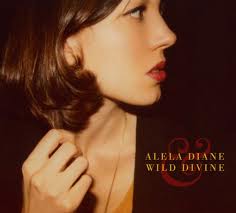
Alela Diane - Alela Diane & Wild Divine: B+

An album so indistinct that the artist had to repeat her name in the title to remind the listener who they’re listening to. Alela Diane & Wild Divine is a very pleasant, very tuneful piece of country-tinged lite rock. However, it’s highly forgettable and people will come out of it remembering what it stands for more than what it actually is. Amidst the competent arrangements, Diane has some pretty clever lines like “Death is a hard act to follow” and “She’s looking like it’s 1995,” but they’re buried in there, tough to find if you’re not looking. The unfortunate thing is that people won’t inspect that much of Wild Divine, and, frankly, I don’t blame them. This album is somewhere in quality between Laura Marling’s I Speak Because I Can and The Watson’s Sisters’ Talking to You, Talking to Me, so my suggestion would be to get the former and leave it at that. While not bad, Wild Divine could use more definition, considering there are literally hundreds of albums like it. In the end, you know the drill. Just because it’s agreeable background music doesn’t make it necessarily worth your time.


Share/Bookmark